A 5 minute scalping strategy aims to capture small, quick moves on the 5-minute chart, usually holding trades for 5 to 30 minutes. It is slower than 1-minute scalping, so you get fewer false signals and more time to think, but it is still fast enough to take several trades in one session.
Below is a complete, rule-based version you can test today: what to put on your chart, exact entry, stop and exit rules, how to find setups faster with a signal screener, and where the strategy fails. You can follow along on GainzAlgo Charts, which is free, runs in your browser and needs no account to explore.
What Is 5-Minute Scalping?
Scalping means taking many small trades and closing them quickly, aiming for a slice of a market's daily range rather than the whole move. On the 5-minute chart each candle covers five minutes, so a typical scalp lasts between one and six candles. The goal is a small, repeatable edge protected by tight risk control, not one big win.
It suits traders who can sit at the screen during active hours, follow rules without second-guessing, and accept that most individual wins are small. If you can only check charts a few times a day, a swing approach on the 1-hour chart and above is a better fit.
1-Minute vs 5-Minute vs 15-Minute Scalping
| Timeframe | Setups per session | Noise | Typical hold | Best for |
|---|---|---|---|---|
| 1-minute | Many | Very high | 1 to 10 minutes | Experienced scalpers in very liquid markets |
| 5-minute | Moderate | Medium | 5 to 30 minutes | Most new scalpers; balance of speed and clarity |
| 15-minute | Few | Lower | 30 minutes to a few hours | Intraday traders who want fewer decisions |
If you already scalp the 1-minute chart, our guide to the best indicators for 1-minute scalping covers that faster style. For most traders the 5-minute chart is the better place to start: costs eat less of each target, and there is time to check a setup before you act.
Your 5-Minute Scalping Chart Setup
Keep the chart lean. Each tool should answer a different question:
- Trend filter: a 50 EMA on the 5-minute chart, plus a glance at the 15-minute or 1-hour chart. Only trade in the direction both agree on.
- Fair value: VWAP for stocks and index products. Favour longs above it and shorts below it. Our VWAP trading strategy guide explains why.
- Pullback zone: a 20 EMA. In a healthy trend, price tends to dip back toward it before continuing.
- Volatility: ATR (14), used to set stops outside normal candle noise. See our guide to the ATR indicator for stop losses.
- Entry trigger: a closed-candle signal, either a price action pattern or a non-repainting buy/sell indicator.
All of these are available on GainzAlgo Charts alongside drawing tools and alerts, so you can build this exact layout for free.
The 5-Minute Scalping Strategy, Step by Step
Step 1: Trade only the active hours
Scalping needs movement and tight spreads. For US stocks, focus on the first 90 minutes after the open and the last hour before the close. For forex, the London session and the London–New York overlap. Crypto trades around the clock, but volume still clusters around the European and US sessions. Our guide to the best time of day to day trade goes deeper.
Step 2: Set your bias on a higher timeframe
Open the 15-minute or 1-hour chart. If price is above a rising 50 EMA, look for longs only on the 5-minute chart; below a falling 50 EMA, shorts only. If the higher timeframe is flat and choppy, skip that market. Our multi-timeframe trading guide covers this in more detail.
Step 3: Wait for a pullback
On the 5-minute chart, wait for price to pull back toward the 20 EMA or VWAP without closing beyond the 50 EMA. Chasing a candle that has already run is the most common way scalpers buy the top or sell the bottom.
Step 4: Enter on a closed-candle trigger
Enter only after a candle closes in your direction from the pullback zone: a bullish engulfing candle, a strong close back above the 20 EMA, or a buy signal from a non-repainting indicator (mirror these for shorts). Waiting for the close may cost a little on entry price, but it removes signals that appear and vanish mid-candle.
Step 5: Place the stop before you enter
Put the stop just beyond the pullback's swing low (longs) or swing high (shorts), or about 1 to 1.5 times ATR from entry, whichever gives the market more room. Then size the position so that stop equals a small, fixed share of your account. A position sizing calculator makes this a ten-second job.
Step 6: Take profit quickly and use a time stop
Target 1.5 times your risk or the next obvious level, whichever comes first. Many scalpers take half off at 1R and move the stop to breakeven. Add a time stop too: if the trade hasn't moved in your favour within three or four candles, close it. A scalp that stalls is usually a scalp that was wrong.
The Rules at a Glance
| Rule | Long | Short |
|---|---|---|
| Higher-timeframe bias | Price above a rising 50 EMA (15m or 1h) | Price below a falling 50 EMA (15m or 1h) |
| Fair value (stocks) | Price above VWAP | Price below VWAP |
| Setup | Pullback to 20 EMA or VWAP | Rally to 20 EMA or VWAP |
| Trigger | Bullish closed candle or buy signal | Bearish closed candle or sell signal |
| Stop | Below swing low, or 1 to 1.5 ATR | Above swing high, or 1 to 1.5 ATR |
| Target | 1.5R or next resistance | 1.5R or next support |
| Time stop | Exit after 3 to 4 candles with no progress | Exit after 3 to 4 candles with no progress |
Find 5-Minute Setups Faster With a Signal Screener
The hardest part of scalping isn't the rules; it's watching enough charts to catch setups as they form. The free GainzAlgo Signal Screener scans active instruments for fresh signals on bars that have already closed, so nothing on the list is a mid-candle guess. A simple 5-minute routine:
- Set the timeframe filter to 5m.
- Choose the direction that matches your higher-timeframe bias, or leave it on Both.
- Pick a market: crypto or stocks.
- Sort by Newest so you see signals while they're still fresh.
- Open each candidate on the chart and check it against Steps 1 to 5 before you trade.
Treat the screener as a shortlist, not a trade list. A signal against the higher-timeframe trend, or one firing straight into a major level, still fails the rules above. Our guide to using a chart screener covers this filtering habit in more depth.
Where GainzAlgo V2 Alpha Fits
If you'd rather not judge triggers by eye on every candle, GainzAlgo V2 Alpha is built for this style. Its Alpha preset is tuned for 1-minute to 1-hour charts, covering scalping and day trading. Each buy or sell signal comes with built-in take-profit and stop-loss levels, signals don't repaint, and real-time alerts tell you when a new one fires.
On a 5-minute chart, use it as the trigger in Step 4 and keep applying your session, bias and time-stop rules. The built-in TP and SL give you a ready-made exit plan, which you can follow or tighten toward the 1.5R target above. You can also set the screener's tier filter to V2 Alpha to scan only for those signals.
GainzAlgo V2 is a one-time purchase with lifetime access and free lifetime updates (regular price $399.95, often discounted during sales). It runs exclusively on GainzAlgo Charts, not TradingView.
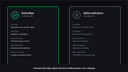
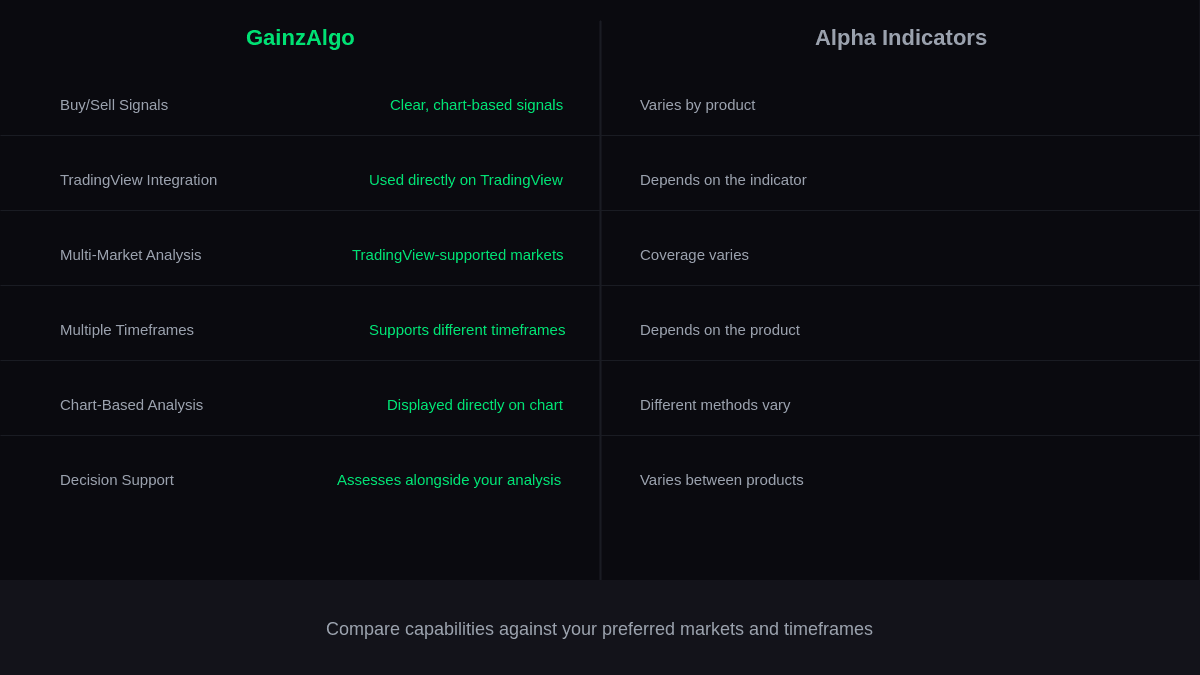
To be fair about alternatives: if you want to code and backtest your own 5-minute rules, TradingView's Pine Script community and strategy tester are more mature, and many free 5-minute scalping scripts are published there. GainzAlgo's strength is ready-made, non-repainting signals with exits attached, a fresh-signal screener, and bar replay for practice, without needing a TradingView plan.
Costs Decide Whether Scalping Works
Small targets make costs matter. Say you buy a $50 stock with a 20-cent stop and a 30-cent target (1.5R). If commission, spread and slippage add up to 3 cents per share round trip, that removes 10% of every winner and makes every loser 15% bigger than planned.
Before going live, check your broker's real costs, avoid thin markets with wide spreads, and use limit orders where you can. If costs regularly exceed about a fifth of your typical target, move up to the 15-minute chart or trade a more liquid market.
When This Strategy Doesn't Work
- Choppy sessions: when the 50 EMA is flat, trend-pullback rules whipsaw. Sit out.
- Major news: around inflation data, rate decisions and earnings, spreads widen and stops can slip.
- Illiquid markets: in small stocks and small coins, one order can push price through your stop.
- Midday US stocks: volume often dries up around lunch, and moves get smaller and messier.
Common 5-Minute Scalping Mistakes
- Overtrading: taking every signal instead of only those that pass every rule. Set a daily stop, such as three losses and you're done.
- Moving the stop: widening a stop to avoid a loss turns a scalp into an unplanned swing trade.
- Ignoring the higher timeframe: a perfect 5-minute buy inside a 1-hour downtrend is still a low-odds trade.
- Not reviewing trades: log every scalp and review weekly. Our guide on how to review your trades gives you a simple process.
Practice before you risk money: open GainzAlgo Charts, build the 5-minute layout above, and use bar replay to walk through past sessions candle by candle until the rules feel automatic.
Frequently Asked Questions
What is the best indicator for 5-minute scalping?
There isn't a single one. A trend filter (50 EMA), a fair-value line (VWAP) and a volatility tool (ATR) cover most needs, with a closed-candle signal as the trigger. Stacking more momentum oscillators usually adds noise, not confirmation.
Is 5-minute scalping profitable?
It can be for disciplined traders with low costs, but many beginners lose money scalping through overtrading and fees. Test the rules with bar replay or a demo account, then trade small until you have a meaningful sample of trades.
How many trades should I take on the 5-minute chart?
Quality matters more than count. Many scalpers take a handful of trades per session and stop after a set number of losses, rather than trading every candle.
Does this strategy work for crypto and forex?
Yes, the rules apply to any liquid market. For crypto and forex, lean more on the EMAs than on VWAP, since there is no single exchange open and close, and stick to major pairs and large-cap coins where spreads stay tight.
This article is for education only and is not financial advice. Trading involves risk, and scalping's high trade frequency magnifies both costs and losses.