
Most traders spend weeks learning options strategies. They study Greeks, practice reading chains, and paper trade until they feel ready, then open an account with whatever broker shows up first in a Google search. That's a mistake! Your broker isn't just a place to place trades. It affects how much you pay per contract, how fast your orders fill, what tools you have access to, and whether you can execute multi-leg strategies at all. A bad broker doesn't just cost you money in fees; it costs you an edge.
The best broker for options trading isn't the one with the flashiest ads or the longest feature list. There's no single right answer. A broker that works for someone buying weekly calls can be completely wrong for someone running iron condors on index options. The right choice comes down to your strategy, your volume, and the tools you actually need.
This guide doesn't tell you which broker to pick; instead gives you a six-step framework so you can evaluate any broker against your own criteria and make a decision you'll actually stand behind. Let's get into it.
Why Choosing the Right Broker Matters for Options Trading Success
Options are already a leveraged instrument. Every dollar you give up in commissions, poor fills, or platform limitations directly hits your bottom line. Here's a simple example. Say you're trading 10 contracts per leg on an iron condor. If your broker charges $0.65 per contract, that's $13 to open and $13 to close, $26 round trip. Do that three times a week, and you're paying $78 per week in commissions before you make a single dollar.
Drop to a broker charging $0.50 per contract, and that number falls to $60 per week. That's $18 saved weekly, $936 a year, just from switching brokers. And that's before factoring in execution quality, platform tools, or how much bad fills are costing you on top. Commissions are just one piece. Platform reliability during high-volatility events, order routing quality, and the tools available to you matter just as much, especially if you're an active trader.
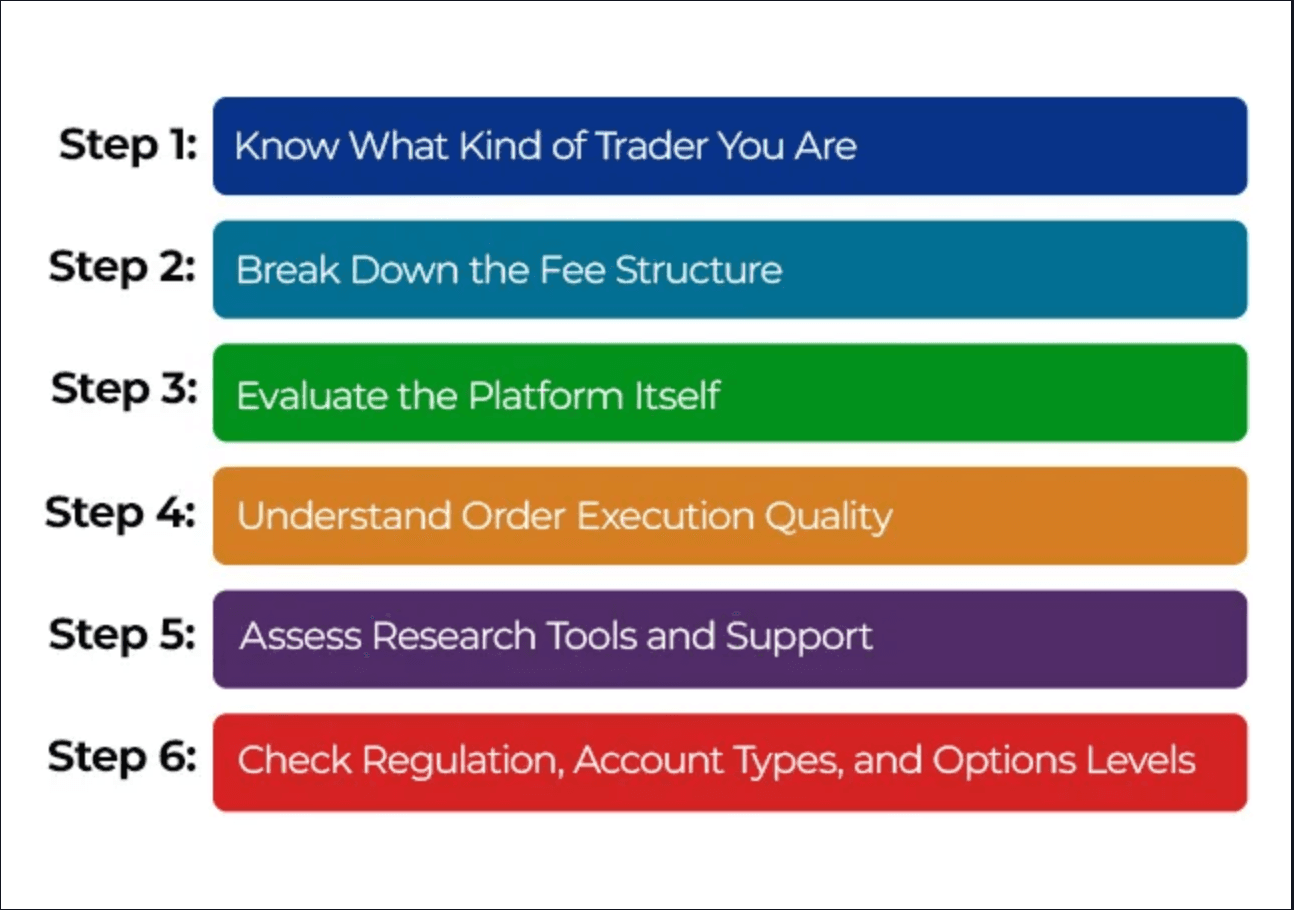
Step 1: Know What Kind of Trader You Are
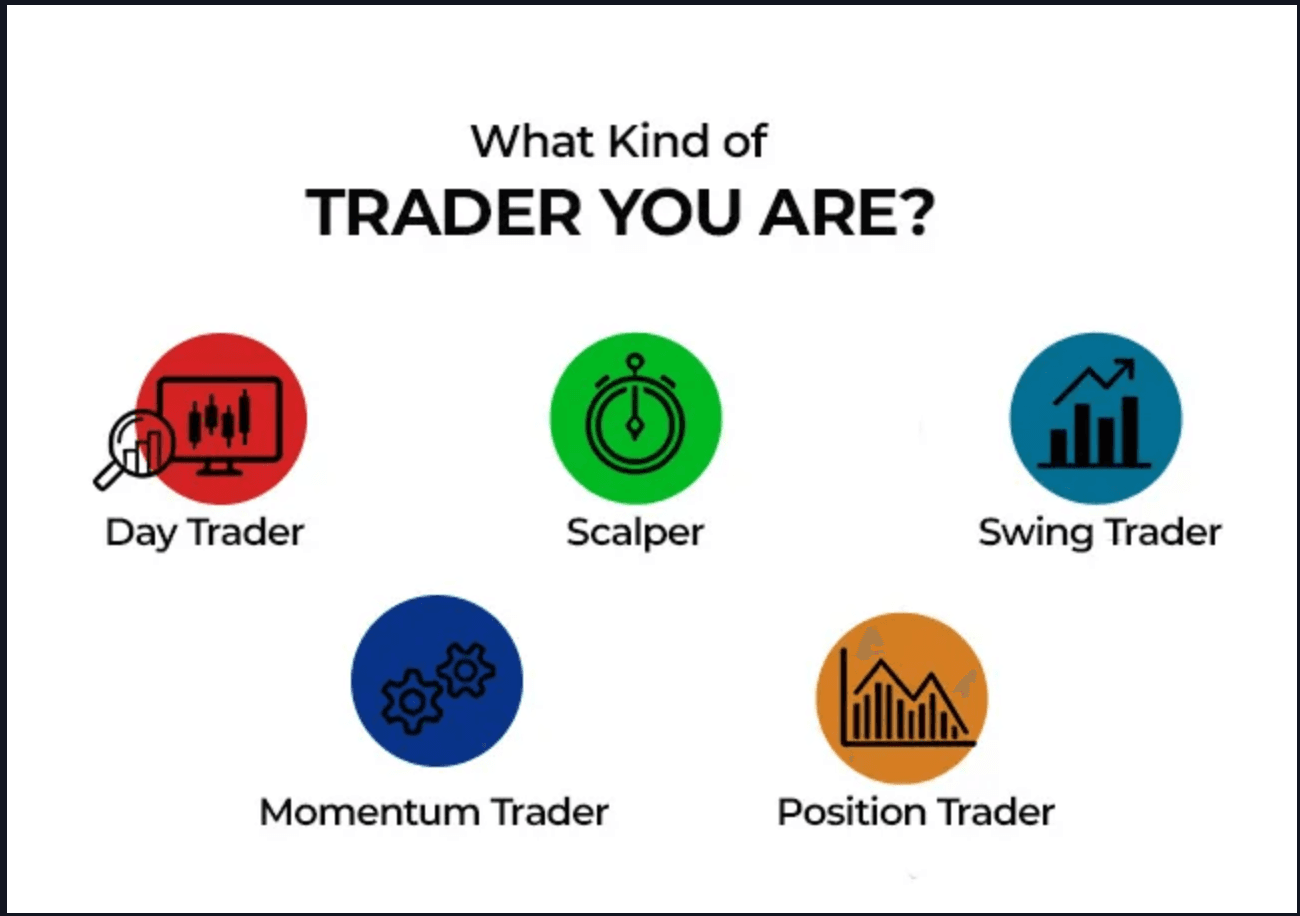
Before you look at a single broker, get clear on how you actually trade or plan to trade. Most people skip this step and end up with a broker that doesn't fit them.
Ask yourself:
- Do you trade single-leg options, just buying calls or puts or multi-leg strategies like spreads, straddles, or iron condors?
- How often do you trade? Once a week, or multiple times a day?
- Are you a beginner who needs education and guidance, or an experienced trader who just needs a clean platform and fast execution?
- Do you trade equities alongside options, or options only?
- Do you need access to futures options?
Your answers will eliminate most brokers immediately. A beginner trading covered calls once a month has completely different needs from someone running DTE iron condors every day. Don't pick a broker built for someone else's trading style.
Step 2: Break Down the Fee Structure
Options fees aren't always obvious. Brokers are good at making their pricing look simple while burying costs in the fine print. Here's what to actually look for:
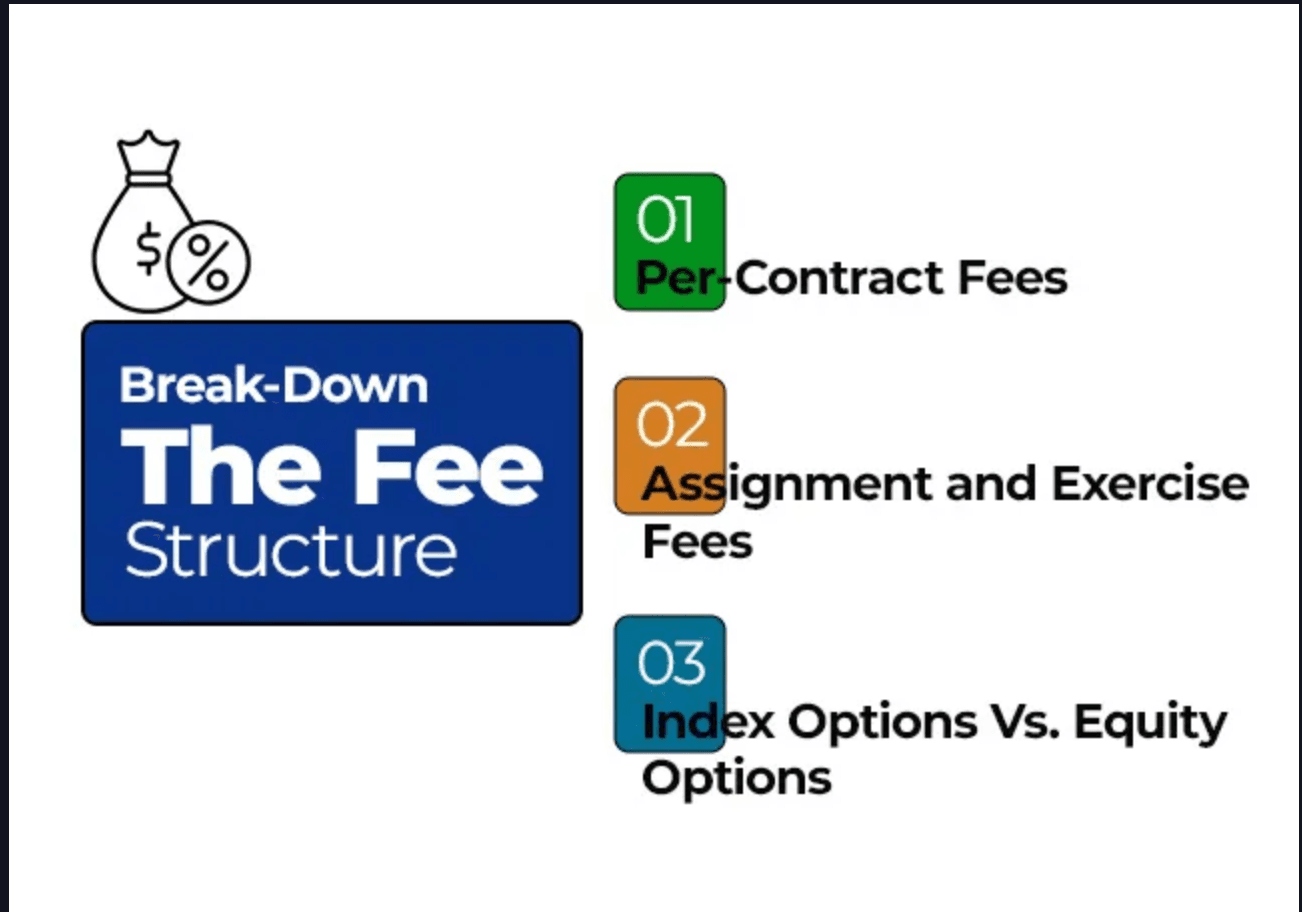
Per-contract fees: This is the most common cost. It's charged per contract, per leg, usually on the opening trade and sometimes on closing too. Some brokers charge to close positions; others don't. If you trade spreads regularly, per-leg fees add up faster than most people expect.
Assignment and exercise fees: Most traders overlook this until it happens to them. If you get assigned to a short option or choose to exercise a long one, many brokers charge a flat fee, sometimes anywhere between $15 and $20. If you run short puts or covered calls regularly, this is a real cost you need to account for.
Index options vs. equity options: Index options often carry different fee structures than equity options. Some traders prefer them for tax reasons. Section 1256 splits gains 60/40 between long-term and short-term, no matter how long you held the position. Check your broker's pricing for both before assuming they're the same.
Hidden costs to watch for:
- Real-time data feed fees, Level 2 quotes often aren't free
- Inactivity fees on accounts that don't trade regularly
- Platform fees for access to professional-grade tools
- Transfer or withdrawal fees
Get the full fee schedule before opening an account, not after.
Step 3: Evaluate the Platform Itself
This is where most broker comparisons go shallow. They list features without telling you which ones actually matter when you're mid-trade.
Options chain display: A good options chain shows you strikes, expiries, bid/ask, volume, open interest, and all the Greeks at a glance without having to dig through menus. If navigating the chain feels slow or cluttered, that friction shows up on every single trade. You want the information in front of you before the opportunity disappears.
Strategy builder: If you trade spreads, condors, or any multi-leg position, you need to see a visual P&L diagram before placing the trade. A solid platform lets you build the position, see max profit, max loss, and break-even points, and understand how the position moves with price and time, all before you click confirm. Trading without this is guesswork.
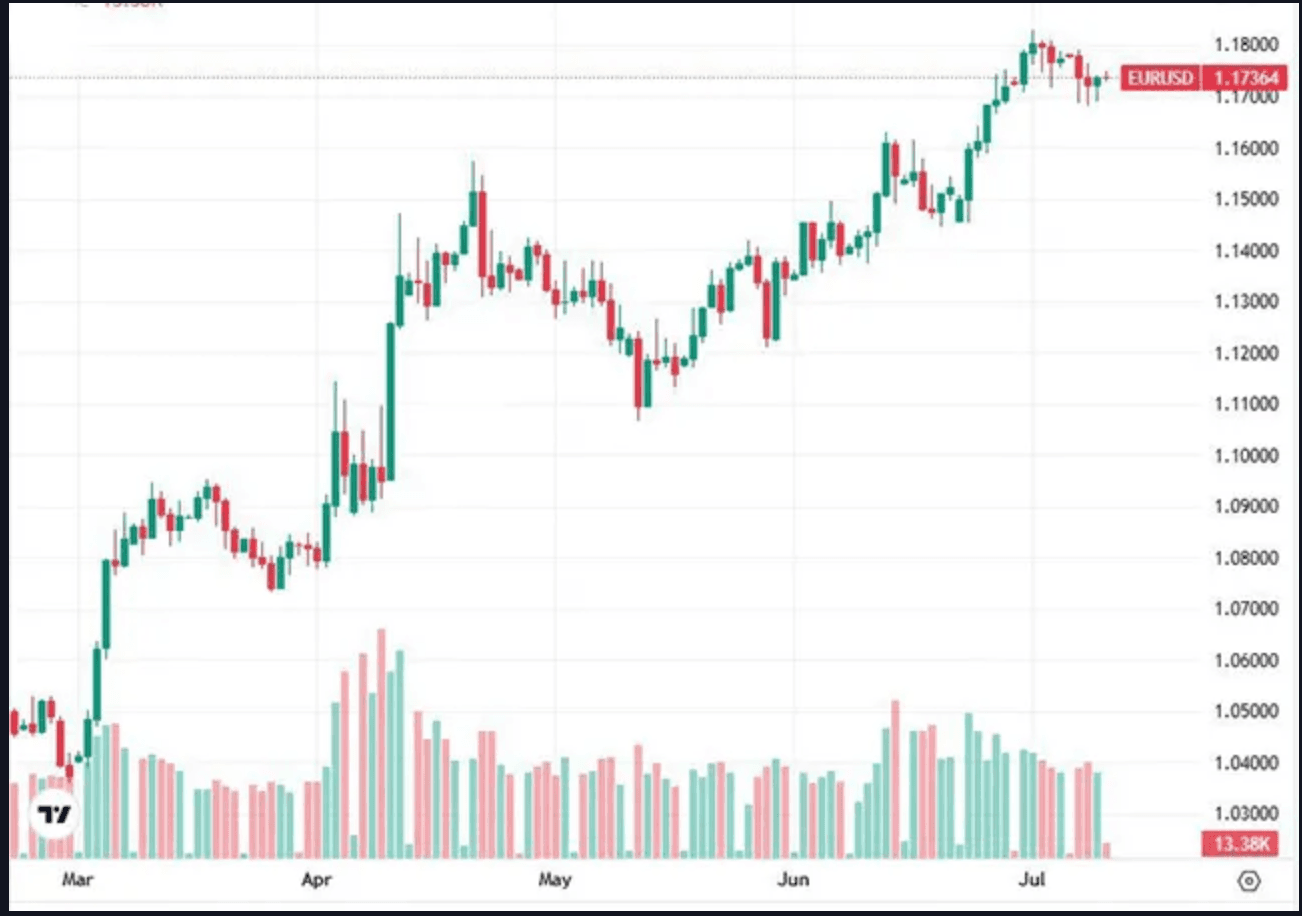
Charting and technical indicators: Not every options trader uses technical analysis, but most want some price context on the chart. Check that the tools cover what you actually use and that the platform doesn't lag during market hours.
Paper trading: Essential for beginners, and worth using even if you're experienced and testing a new strategy. A paper trading environment that mirrors the live platform lets you practice without putting real money at risk. One thing to check is that it runs on real-time data, not delayed quotes. Delayed paper trading gives you a false read on how your entries and exits would actually perform.
Mobile app: If you manage positions away from your desk, the mobile app needs to actually work, not just show you your portfolio balance. Can you close a position, roll a spread, or set a price alert from your phone? Test it before you're in a situation where you need it.
Step 4: Understand Order Execution Quality
Two traders can use the same broker, place the same trade at the same time, and get different fills. Execution quality is the part of broker selection that almost nobody talks about, and it affects every single trade you make.
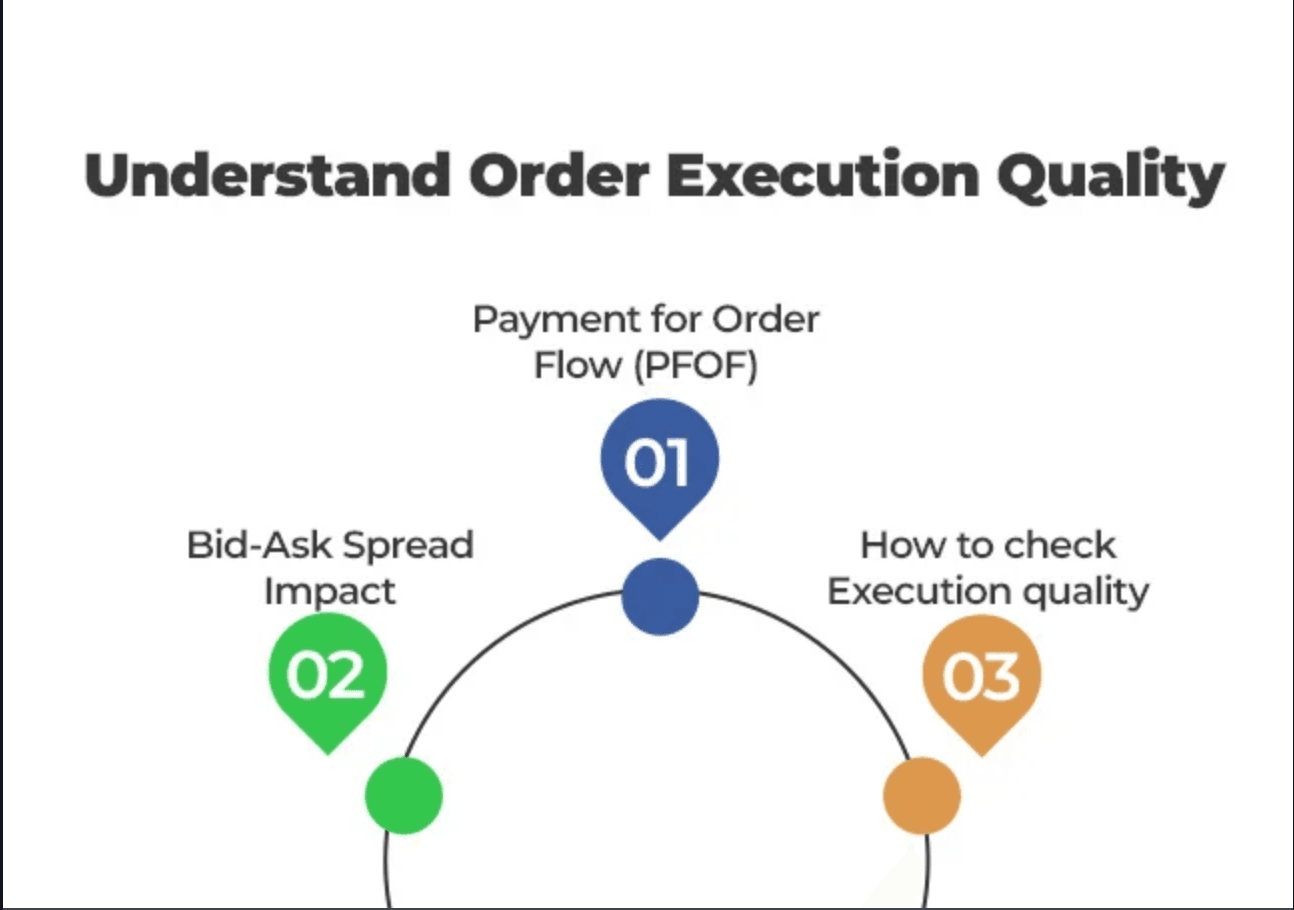
Payment for Order Flow (PFOF): Many retail brokers make money by routing your orders to market makers who pay them for that flow. Those market makers, in return, may not always fill you at the best available price. Your order still gets filled, just sometimes at a slightly worse price than you could have gotten with smarter routing.
This matters more for options than it does for stocks because option spreads are wider. A penny or two per contract might sound insignificant. Multiply it across dozens of trades a month, and it's a real drag on your returns.
Bid-ask spread impact: In highly liquid options, the spread might be a cent or two. In less liquid names, it can be $0.20 to $0.50 or more. Your broker's routing matters most in these illiquid conditions. That's where broker routing matters most. Smart routing saves you money when spreads are wide, poor routing costs you on nearly every trade.
How to check execution quality: Brokers file quarterly execution quality reports under SEC Rules 605 and 606. They're publicly available and show fill rates, execution speeds, and price improvement data. It takes some effort to read, but it's real data, not a marketing copy.
Step 5: Assess Research Tools and Support
Built-in screeners: A good options screener lets you filter by implied volatility rank, volume, unusual activity, or strategy parameters. If your broker doesn't have one, you'll pay for third-party tools. That's not the end of the world, but a factor that factors into your total trading expenses.
Educational resources: If you're still building your knowledge, the quality of a broker's educational content matters more than most people admit. Some have full video libraries, strategy guides, and live sessions. Others have almost nothing. For someone early in their options journey, access to solid education inside the platform can meaningfully speed up development.
Customer support: At some point you'll need help with an order that didn't fill, an unexpected assignment, a platform issue mid-session. Find out how fast you can reach a real person before it happens. Test it with a basic question before opening the account.
Step 6: Check Regulation, Account Types, and Options Levels
Is the broker properly regulated? In the US, any broker you use should be registered with both the SEC and FINRA. FINRA runs a free public tool that lets you look up any registered broker or firm and see their full background licensing history, client complaints, disciplinary actions, and whether they've been involved in any regulatory investigations. Use it before you hand over your money. It takes about 30 seconds.
SIPC protection: SIPC insures your account up to $500,000, with $250,000 of that covering cash in the event the broker fails. This doesn't protect you from investment losses, but it does protect your assets if the firm itself collapses. Most reputable brokers in the US carry this coverage. If a broker doesn't, that's a serious red flag.
Account types
Cash account: No margin, no short options, no margin calls. You can buy calls and puts, but that's about it. You also have to wait for cash to settle before reusing its options to settle on a T+1 basis.
Margin account:Required for most active options trading. Let's you trade spreads, sell covered calls, short puts, and access more complex strategies. Comes with margin call risk if positions move against you.
Retirement account (IRA): Some brokers allow options trading inside retirement accounts, but it's typically limited to defined-risk strategies. Worth checking if you want to trade options in a tax-advantaged account.
Options approval levels: Brokers assign approval levels, typically Level 1 through 4, based on your stated experience and account size. Higher levels unlock more complex strategies like naked options. To trade spreads, you'll generally need at least Level 2 or 3. Be straightforward when you apply. Overstating your experience to get a higher level and then making expensive mistakes isn't worth it.
Quick Broker Comparison
Here's a general breakdown of what different broker types tend to offer without naming specific platforms:
| Broker Type | Fee Range | Best For | Paper Trading |
|---|---|---|---|
| Active trader focused | Low per-contract, free to close | High-frequency options traders | Usually yes |
| Full-service with advanced tools | Mid-range per contract | Serious traders need analytics | Usually yes |
| High-volume / institutional | Lowest tiered rates | Large volume, international traders | Usually yes |
| Commission-free, mobile-first | $0 commissions | Beginners, simple strategies | Sometimes |
The right broker type for you comes down to how often you trade, what strategies you run, and how much platform functionality you actually need.
How GainzAlgo Fits In
Choosing the right broker gives you the infrastructure. But knowing what to trade, which setups have a real edge, when to enter, and where to set your strikes is a separate problem entirely.
That's where GainzAlgo comes in. Our algo-based signals and tools help you identify high-probability setups so you're not just placing trades, you're placing trades with a clear reason behind them. A good broker executes your strategy. GainzAlgo helps you build one worth executing.
Final Checklist Before You Open an Account
Run through this before clicking "open account":
- Fee structure is fully clear per contract, assignment fees, and any hidden costs
- Platform has a proper options chain with Greeks visible and a P&L diagram builder
- Paper trading is available and runs on real-time data
- Broker is registered with the SEC and FINRA, and is SIPC-insured
- Execution quality reports are publicly available and worth reviewing
- Account type and options approval level match your strategy
- Customer support is reachable by phone or live chat, not just email
- Mobile app can handle actual trade management, not just viewing
- You've read at least one independent review from someone who actively trades options
Best Broker for Options Trading
Picking a broker comes down to what you actually need from one. Some charge less but give you fewer tools. Others have better platforms but cost more per contract. The table below gives you a factual starting point, not a ranking, just a side-by-side so you can see where different brokers sit relative to each other.
| Broker | Per-Contract Fee | Best For | Paper Trading | Platforms |
|---|---|---|---|---|
| Tastytrade | $1.00 to open, free to close | Active options traders | Yes | Desktop + Mobile |
| TD Ameritrade (thinkorswim) | $0.65 | Serious traders needing advanced tools | Yes | thinkorswim Desktop + Mobile |
| Interactive Brokers | $0.25–$0.65 (tiered) | High-volume and international traders | Yes | TWS Desktop + Mobile |
| Webull | $0 commissions | Beginners, cost-conscious traders | Yes | Mobile-first |
| E*TRADE | $0.65 | Beginners to intermediate traders | Yes | Power E*TRADE + Mobile |
| Robinhood | $0 commissions | Casual, simple options buying | No | Mobile-only |
Fees are approximate and subject to change. Always verify it on the broker's site. No broker in this table is a bad choice across the board; each one fits a different type of trader. The right one for you depends on the criteria you worked through in the steps above: your trading frequency, the strategies you run, and how much you value platform depth versus low cost. Use this as a shortlist, then go test the platforms that match your profile before committing.
Conclusion
Picking a broker isn't a one-time decision you make on autopilot and forget about. The right broker for a beginner buying calls is not the right broker for someone running weekly iron condors at scale.
Work through the six steps above in order. Get clear on your trading style first. Then evaluate fees, platform quality, execution, research tools, and regulatory standing. Use the comparison table as a starting point, not a final answer. Once you've narrowed it down to two or three options, open paper trading accounts and actually use the platforms. Read the fee schedules. Test customer support. The broker that holds up under that kind of scrutiny is the one worth opening a real account with.
Ready to put your broker to work? Check out GainzAlgo's strategy tools and see how algorithmic signals can sharpen your options trading.
FAQS
What is the best broker for options trading?
It depends on how you trade. Active traders need low fees and a powerful platform. Beginners need education and simplicity. Match the broker to your strategy, not the other way around.
Which broker has the lowest options trading fees?
Commission-free brokers charge $0 per contract. Most full-service platforms charge $0.65. High-volume traders can get as low as $0.25 through tiered pricing. Also check assignment fees ($15–$20 each) and data feed costs, these often cost more than the commissions.
Can I trade options with a cash account?
You can buy calls and puts, but that's it. No spreads, no short puts, no margin. You also wait for cash to settle before reusing it. For most strategies beyond basic buying, you need a margin account.
Is paper trading available at most options brokers?
Most major brokers offer it, but check that it runs on real-time data not delayed quotes. Delayed paper trading gives a false picture of how your entries and exits would actually perform.
What is payment for order flow and does it affect options trades?
PFOF is when brokers route your orders to market makers who pay for that flow. Those market makers don't always fill you at the best price. With options, where spreads are wider than stocks, even small fill differences add up across many trades.