Analyzing when to enter or exit a trade can become complicated when traders have to examine charts, indicators, price action, and market conditions on their own.
Buy Sell Signal Analysis provides a structured way to examine potential entry and exit opportunities, but the process can differ significantly depending on whether signals are assessed manually or with a dedicated trading system.
Manual analysis gives traders direct control over how they interpret market information. GainzAlgo, meanwhile, is designed to provide AI-powered buy and sell signals through TradingView, with features such as multi-timeframe analysis, built-in take-profit and stop-loss levels, and non-repainting signals in its V2 offering.
These features combine signals and overlays to present market information directly on the chart. The difference is mainly in how market information is processed and presented to the trader.
In this blog, we will explore:
- What buy sell signal analysis means
- Seven key differences between GainzAlgo and manual analysis
- How traders can compare both approaches
- Which factors matter when evaluating a signal workflow
What Is Buy Sell Signal Analysis?
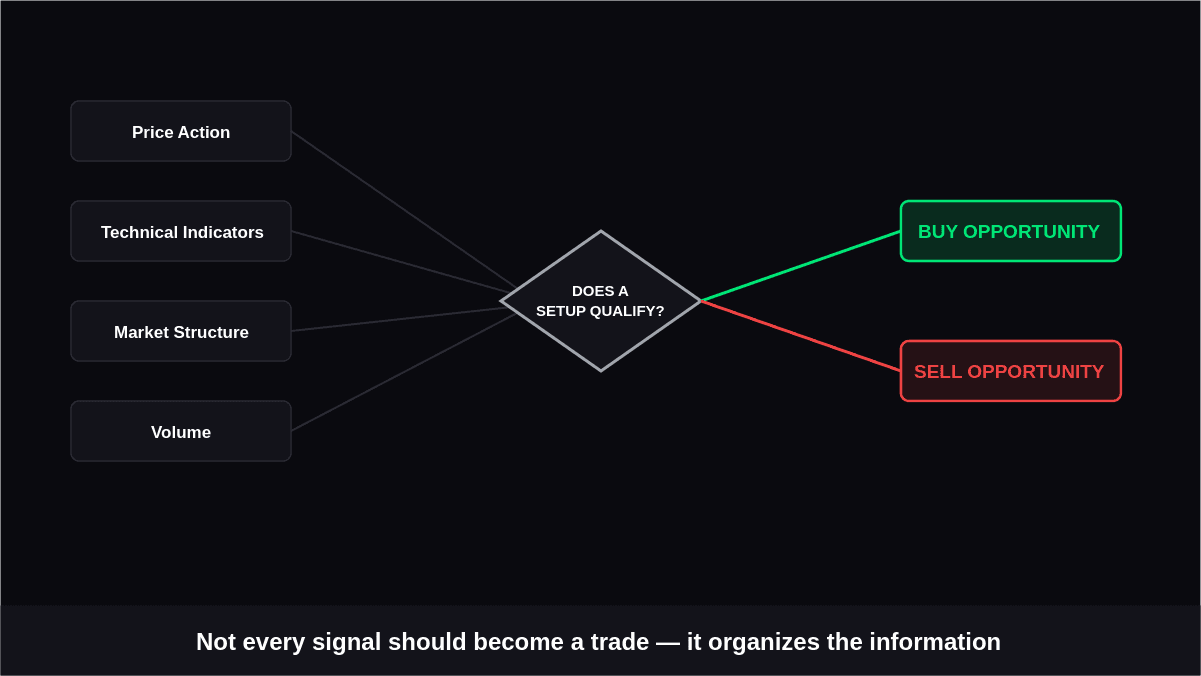
Buy sell signal analysis is the process of examining market information to identify conditions that may support a potential long or short trade. Traders can use price action, technical indicators, market structure, volume, and other forms of analysis to determine whether a setup deserves attention.
The process does not automatically mean that every signal should become a trade. Instead, it helps organize the information behind a potential market entry or exit. Some traders perform this assessment manually, while others use software that processes multiple inputs and displays signals directly on a chart.
7 Main Differences Between GainzAlgo and Manual Buy Sell Signal Analysis
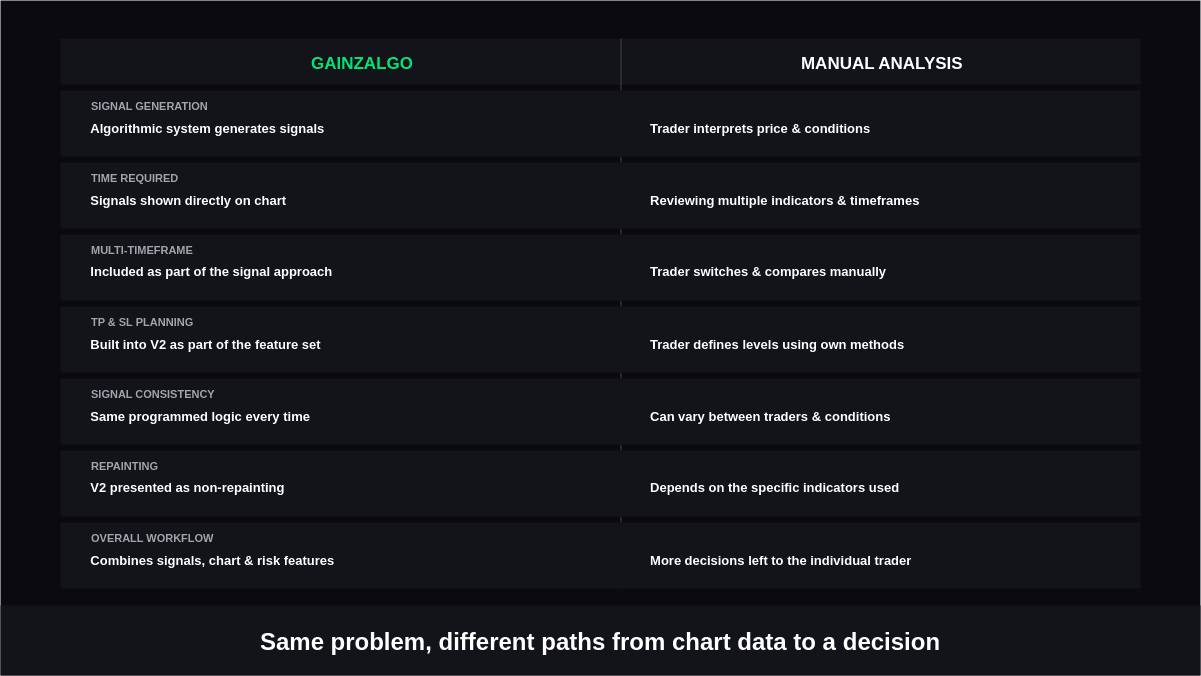
GainzAlgo and manual analysis approach the same basic trading problem from different directions. One focuses on processing and presenting signals through a dedicated system, while the other depends more heavily on the trader's own chart-reading process.
The following differences show where the workflows diverge.
1. Signal Generation
The first difference is how a potential trade setup is identified. GainzAlgo processes market conditions through its programmed system, while manual analysis depends on the trader's own interpretation.
- GainzAlgo: Uses algorithmic analysis to generate buy and sell signals on supported charts.
- Manual analysis: Requires the trader to interpret price action and technical conditions before identifying a potential setup.
2. Time Required for Chart Analysis
The amount of time spent reviewing charts can vary significantly between the two approaches. A signal-based system can reduce some of the repetitive chart-scanning work involved in manual analysis.
- GainzAlgo: Presents signals directly on the chart, reducing the amount of manual scanning required to identify potential setups.
- Manual analysis: Can require reviewing multiple indicators, timeframes, support and resistance areas, and price movements before reaching a conclusion.
3. Multi-Timeframe Confirmation
Looking at several timeframes can provide additional context around a potential setup. The main difference is who handles the process of comparing those different chart views.
- GainzAlgo: Its positioning includes multi-timeframe confirmation as part of its signal approach.
- Manual analysis: The trader must switch between timeframes and determine how the different views support or conflict with one another.
4. Take-Profit and Stop-Loss Planning
Risk planning is another area where the workflows differ. GainzAlgo V2 incorporates predefined TP and SL levels, whereas manual traders typically establish these levels themselves.
- GainzAlgo: GainzAlgo V2 includes built-in TP and SL levels as part of its feature set.
- Manual analysis: Traders generally determine their own levels using methods such as recent highs and lows, support and resistance, volatility, or predefined risk rules.
5. Signal Consistency
A programmed system follows its defined logic when processing market conditions. With manual analysis, the interpretation can change depending on the trader and the circumstances surrounding the setup.
- GainzAlgo: Applies the same programmed signal logic when evaluating market conditions.
- Manual analysis: Results can differ between traders because each person may interpret the same chart, indicator reading, or price movement differently.
6. Repainting and Signal Confirmation
Signal stability matters when reviewing historical charts and assessing how an indicator behaves after a setup appears. GainzAlgo V2 is presented as non-repainting, while manual workflows depend on the specific indicators being used.
- GainzAlgo: GainzAlgo V2 is presented as providing non-repainting signals, meaning its signal behavior is designed to avoid changing historical signals after confirmation.
- Manual analysis: Repainting is primarily an issue associated with certain indicators rather than manual analysis itself. A trader can still use indicators that revise signals if their tools are not properly evaluated.
7. Overall Trading Workflow
The final difference is how many parts of the analysis process are handled within one workflow. GainzAlgo brings several signal-related features together, while manual trading leaves more decisions to the individual trader.
- GainzAlgo: Combines signal generation, chart integration, and selected risk-management features into one TradingView-based workflow.
- Manual analysis: Gives traders greater responsibility for selecting their Trading indicators, confirming setups, defining risk levels, and deciding when a trade is appropriate.
How Can You Compare GainzAlgo and Manual Analysis?
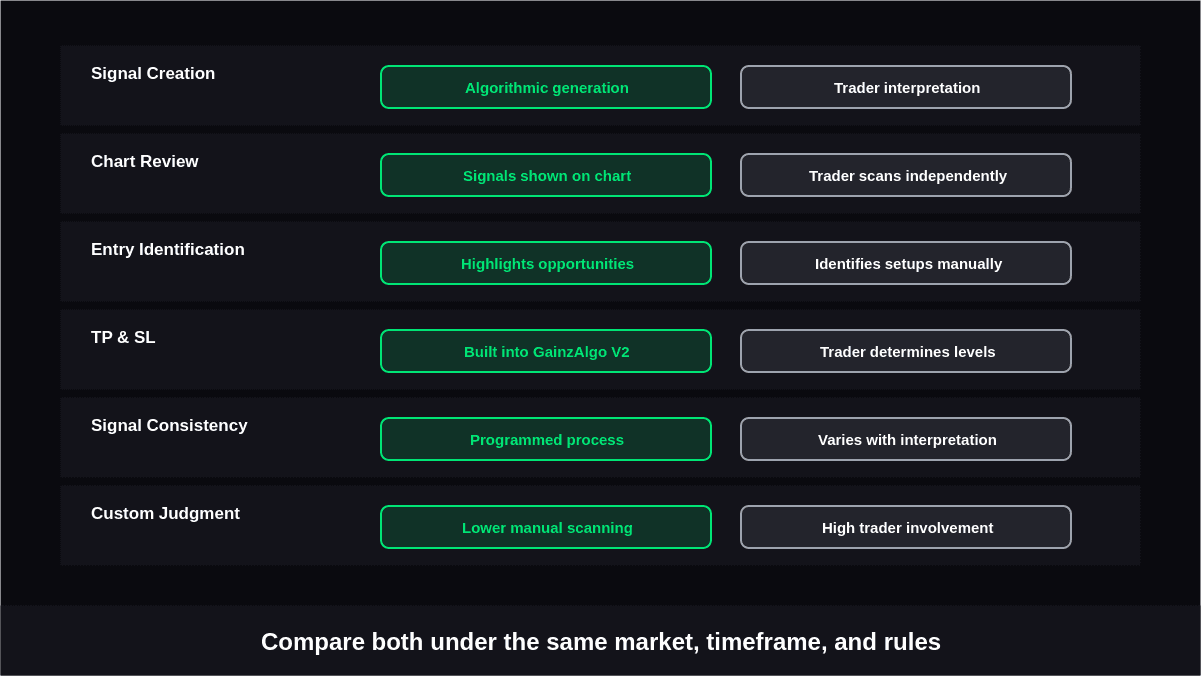
A meaningful comparison should focus on the process rather than simply counting how many signals each approach produces. Traders can evaluate both methods using the same market, timeframe, historical period, and trading rules.
Consider the following factors when testing them:
| Comparison Factor | GainzAlgo | Manual Analysis |
|---|---|---|
| Signal creation | Algorithmic signal generation | Trader interpretation |
| Chart review | Signals displayed on the chart | Trader scans charts independently |
| Market coverage | Crypto, forex, stocks, commodities, and indices | Depends on the trader's chosen markets |
| Timeframe analysis | Supports multiple timeframes | Trader selects and compares timeframes |
| Entry identification | Signals highlight potential opportunities | Trader identifies setups manually |
| TP & SL | Built into GainzAlgo V2 | Trader determines levels |
| Signal consistency | Programmed process | Can vary with individual interpretation |
| Repainting approach | GainzAlgo V2 is presented as non-repainting | Depends on the indicators and methods used |
| Custom judgment | Lower dependence on manual scanning | High level of trader involvement |
| Learning requirement | Requires understanding how to interpret its signals | Requires broader knowledge of chart analysis |
Neither column represents a guaranteed trading outcome. Historical testing can help traders understand how each workflow behaves under specific conditions, but past results do not establish future performance.
What Should Traders Evaluate Before Choosing a Method?
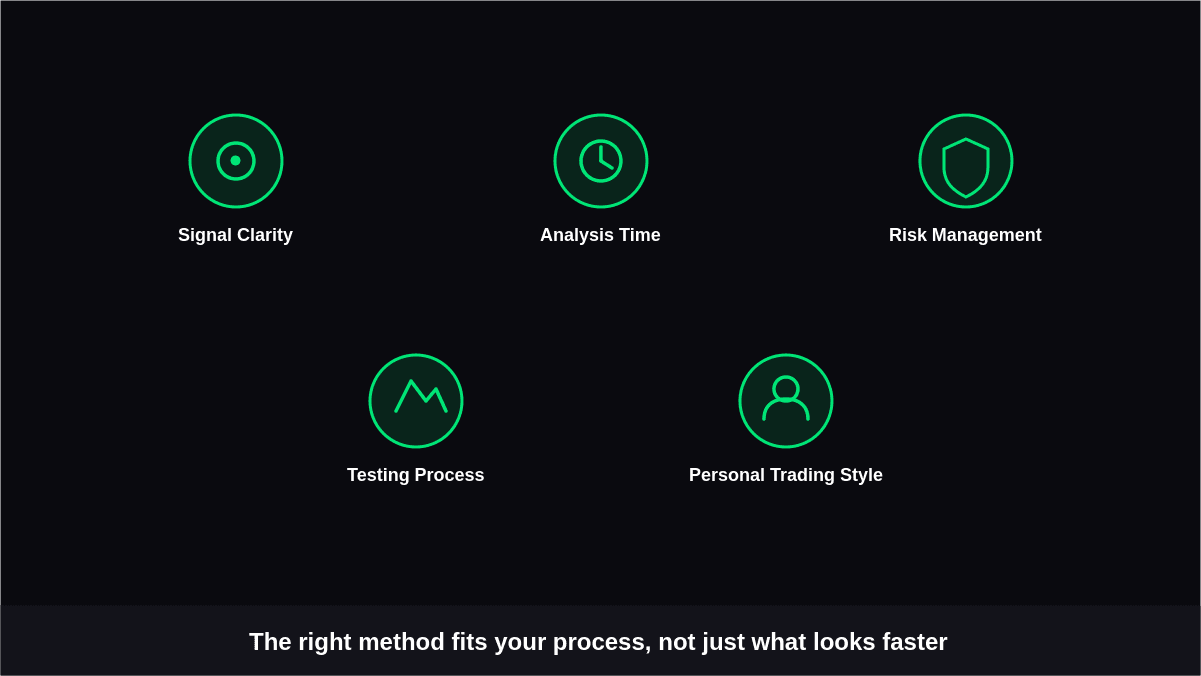
The most useful comparison goes beyond whether one method looks faster or easier. Traders should examine how each approach fits their decision-making process, risk rules, and preferred level of chart involvement.
Signal Clarity
Look at whether the method makes potential buy and sell signals easy to identify without creating confusion from excessive chart information.
Analysis Time
Consider how much time you want to spend scanning charts, checking multiple indicators, and confirming potential setups before making a decision.
Risk Management
Check whether your chosen workflow gives you a consistent way to define position risk, stop-loss placement, and potential profit targets.
Testing Process
Use the same historical period and market conditions when comparing approaches. This makes it easier to identify differences in signal frequency, timing, and behavior.
Personal Trading Style
A trader who prefers direct chart interpretation may want more manual control. Someone looking for a structured signal-based workflow may prefer having more analysis presented directly on the chart.
Conclusion
Buy Sell Signal Analysis can be performed through a fully manual process or supported by a dedicated system such as GainzAlgo. The key difference is how market information moves from raw chart data to a potential trading decision.
Manual analysis puts more responsibility on the trader to identify, confirm, and manage setups, while GainzAlgo is designed to streamline parts of that process through algorithmic entry exit signals and integrated chart features.
When comparing the two, focus on signal behavior, analysis time, confirmation methods, risk management, and your own trading workflow. Testing both approaches under consistent conditions can provide a clearer understanding of how each method fits your strategy.