Trading decisions can be built around predefined conditions, technical signals, or a combination of structured market analysis. Rule-Based Trading Systems rely on clearly defined instructions that tell traders when to enter, exit, manage risk, or stay out of a position.
GainzAlgo takes a different approach by providing chart-based signals and additional tools designed to help traders identify potential opportunities.
The difference is not simply about choosing one indicator over another. A rule-based approach centers on the logic a trader creates and follows, while GainzAlgo provides a ready-made framework for analyzing charts through signals, market coverage, and features such as take-profit and stop-loss levels in its V2 presets.
This distinction can also help traders understand how automated trading strategies differ from a system where the trader remains responsible for interpreting and acting on the signals.
In this blog, we will explore how the two approaches differ, where they overlap, and what traders should consider when deciding which type of system fits their process.
What is Rule-Based Trading Systems
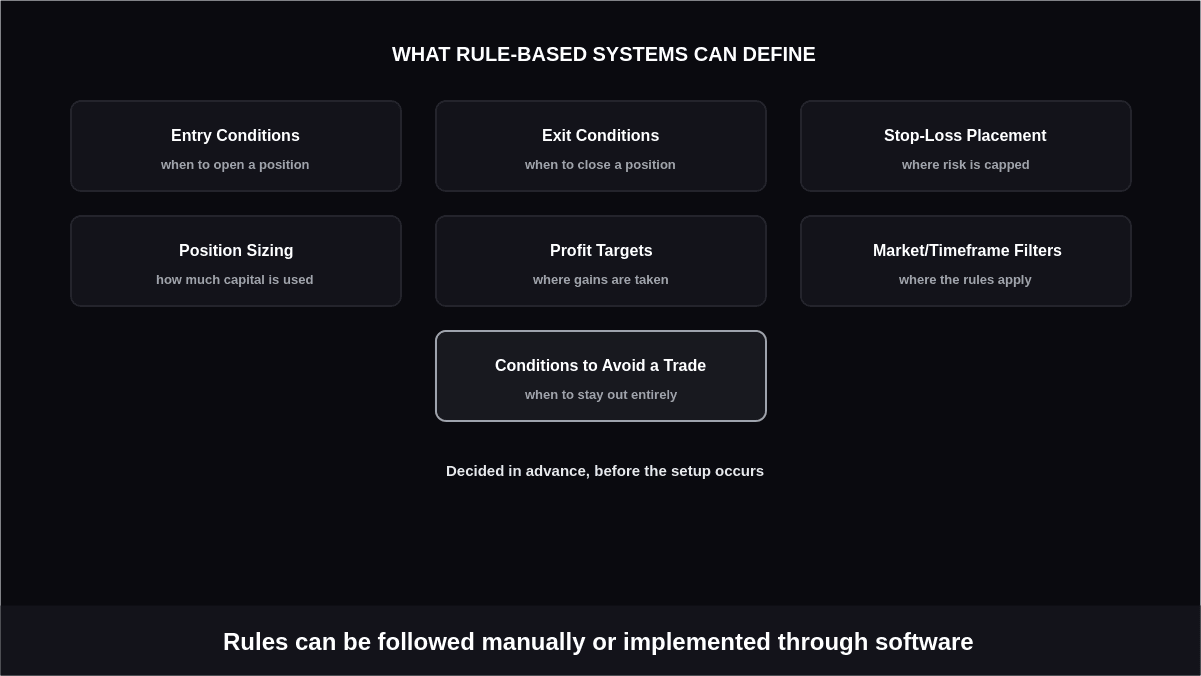
A rule-based trading system uses predetermined conditions to guide trading decisions. Instead of deciding what to do based on emotions or changing opinions from one trade to another, the trader establishes criteria in advance.
For example, a rule-based trading strategy might require a moving-average crossover, a specific momentum reading, and a defined risk-to-reward ratio before a trade can be considered.
The rules can cover several parts of the trading process:
- Entry conditions
- Exit conditions
- Stop-loss placement
- Position sizing
- Profit targets
- Market or timeframe filters
- Conditions for avoiding a trade
The main characteristic is that the decision process is defined before the setup occurs. The rules can be followed manually or implemented through software, depending on the system's complexity.
GainzAlgo vs Rule-Based Trading Systems
GainzAlgo and rule-based systems can both provide structure, but they approach market analysis from different directions. A traditional rule-based system starts with logic created by the trader, whereas GainzAlgo provides predefined chart signals and supporting features.
GainzAlgo V2 is described by the platform as an AI-powered indicator with buy and sell signals, multi-market coverage, and built-in TP and SL levels. Rule-based systems, meanwhile, can be built around almost any combination of technical or quantitative conditions.
| Feature | GainzAlgo | Rule-Based Trading Systems |
|---|---|---|
| Decision framework | Provides predefined market signals and chart-based analysis | Uses conditions established by the trader |
| Signal generation | Buy and sell signals are displayed on charts | Signals occur when the programmed or defined rules are satisfied |
| Customization | Uses available GainzAlgo versions and presets | Rules can be designed and modified around a trader's methodology |
| TP & SL | Built-in TP and SL are available with GainzAlgo V2 presets | Trader defines the relevant exit and risk conditions |
| Market coverage | Designed for crypto, forex, stocks, and commodities | Depends on the system and data used |
| Timeframes | GainzAlgo V2 supports different market timeframes | Determined by the rules created for the strategy |
| Repainting | GainzAlgo states that its V2 signals do not repaint | Depends on how the individual system is designed |
| Implementation | Designed for use through TradingView | Can be manual, coded, or integrated into automated trading systems |
| Setup effort | Ready-made indicator framework | Requires development or selection of a ruleset |
| Ongoing changes | Product updates and presets are handled by GainzAlgo | Trader controls changes to their own rules |
The table highlights an important distinction: one approach provides a ready-to-use framework, while the other gives the trader greater control over how the decision process is constructed.
How Each Approach Handles Trading Decisions
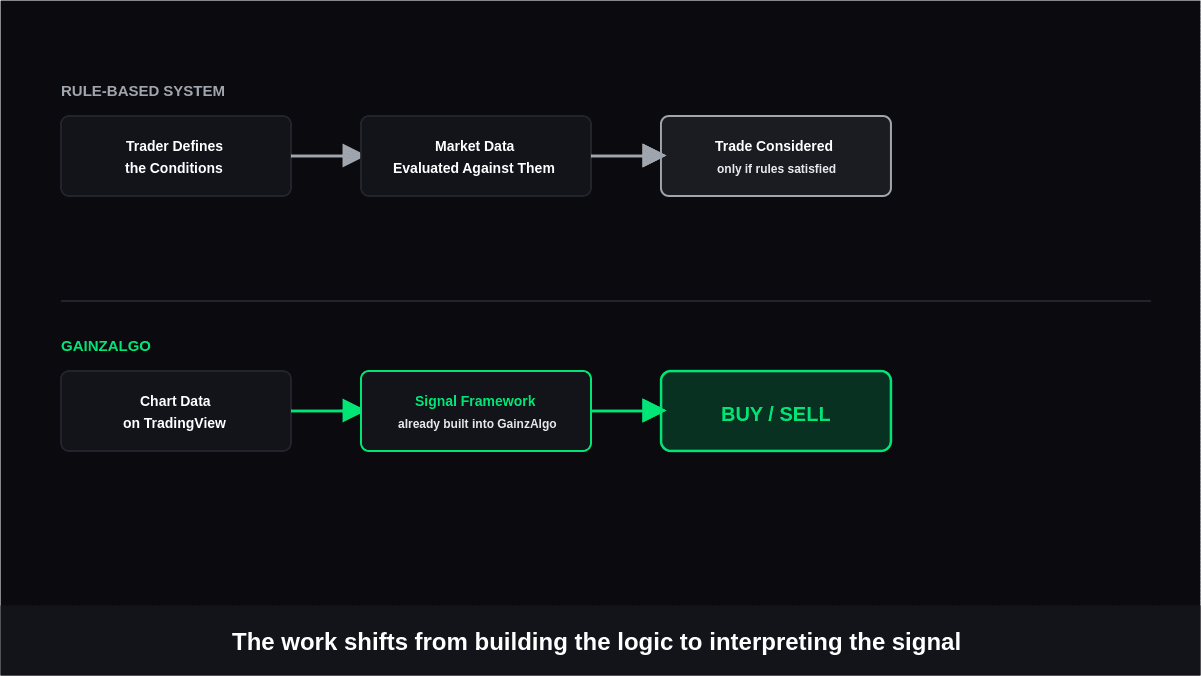
A rule-based system requires the trader to define the conditions that matter. For example, a trader could specify that a position is only considered when price crosses a particular moving average while volume exceeds a selected threshold.
GainzAlgo instead presents signals directly on the TradingView chart. Its V2 offering also includes features intended to provide additional context, including TP and SL levels and coverage across markets and timeframes.
This changes where the work happens. With a self-created ruleset, much of the initial effort goes into developing, testing, and refining the logic. With a ready-made indicator, the focus shifts toward understanding what the signals represent and determining how they fit into the trader's existing process.
Neither approach removes the need for judgment. Market conditions can change, and historical results cannot establish what will happen on future trades.
Flexibility, Testing, and Risk Management
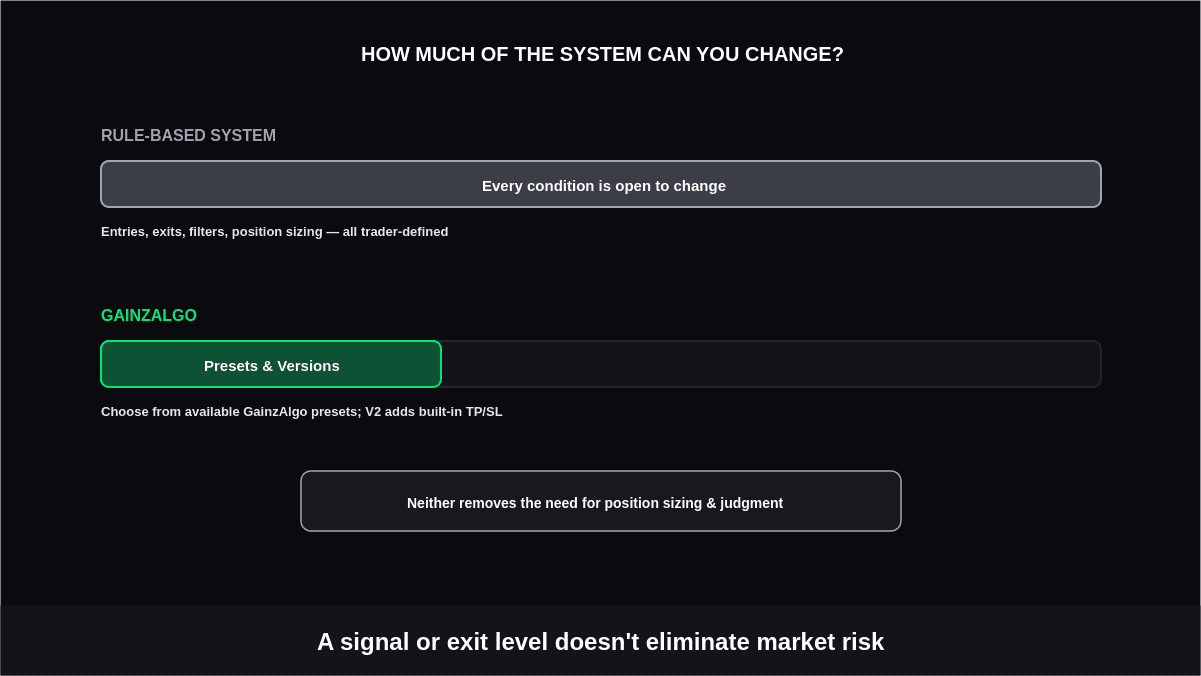
Flexibility is one of the clearest differences between these approaches.
A trader building their own system can change individual conditions, remove filters, alter position-sizing rules, or test different combinations of signals. That level of control can be useful for traders who want to develop a highly specific methodology.
With GainzAlgo, the underlying signal framework is already developed. Traders can choose from the available product versions and V2 presets rather than constructing every condition themselves.
Risk management also deserves separate attention. A rules-based system can specify exactly how much capital is exposed on each position, where a stop is placed, and when profits are taken. GainzAlgo V2 includes built-in TP and SL levels, which can give traders predefined reference points when evaluating a setup.
In either case, the presence of a signal or exit level does not eliminate market risk. Position sizing and trade management remain important parts of the overall process.
Which Approach Fits Different Trading Processes?
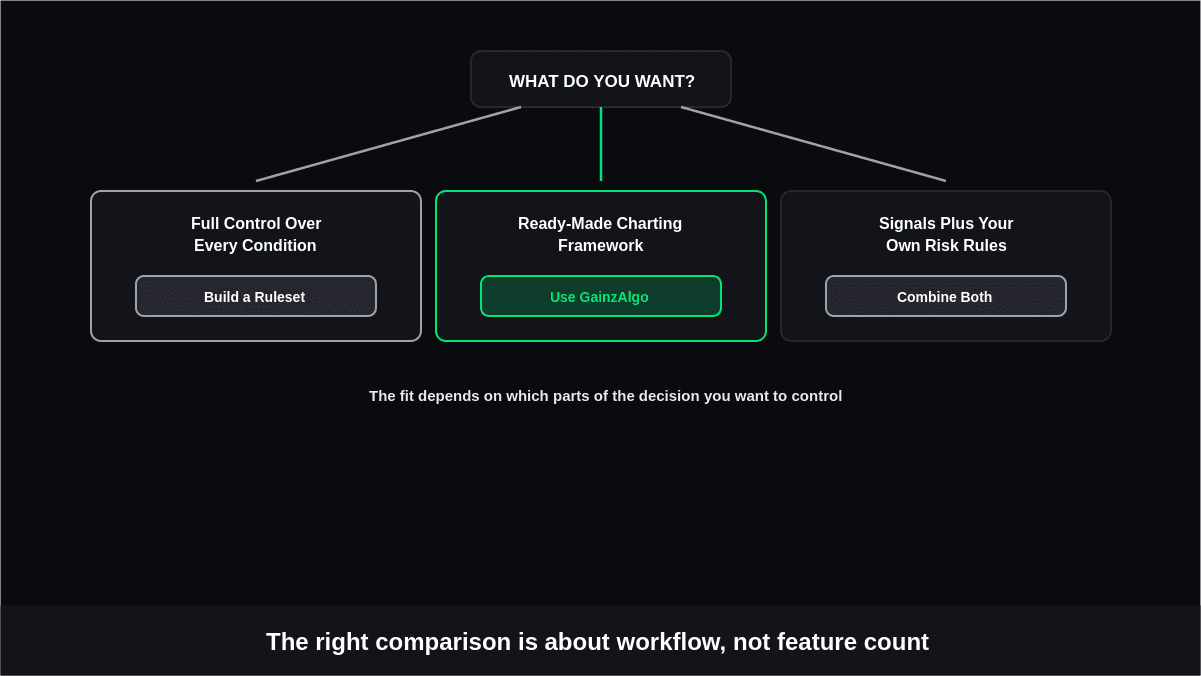
The right comparison depends on what the trader wants from their workflow rather than simply the number of features available.
A self-developed ruleset may be more suitable for someone who wants direct control over every condition in their methodology. That trader may prefer to test individual variables and change the system as their research develops.
GainzAlgo may fit traders who want a ready-made charting framework with signals and additional features rather than building every market condition themselves.
Some traders can also use both concepts together. A trader might use GainzAlgo signals as one input while applying separate trading rules for position size, maximum exposure, trade frequency, or when to avoid a market.
The key is to understand which parts of the decision process come from the indicator and which are controlled by the trader.
Conclusion
Rule-Based Trading Systems and GainzAlgo provide different ways to bring structure to market analysis. A rules-based approach gives traders control over the conditions that trigger entries, exits, and risk-management decisions, while GainzAlgo provides a predefined signal framework with features such as buy and sell signals and TP/SL levels in its V2 presets.
The more useful comparison is therefore about workflow. Traders who want to build and modify their own logic may prefer developing a rules-based methodology.
Those looking for a ready-made TradingView tool may instead consider GainzAlgo as part of their analysis process, using its signals and overlays to support chart interpretation.
Whichever approach is used, traders should understand how the system works, test their process with appropriate historical data, and recognize that past performance does not guarantee future results.