Options gamma exposure explained starts with a simple question: what happens when options dealers must continuously adjust their hedges as the underlying asset moves? Gamma helps answer that question. It measures how quickly an option's delta changes when the underlying price changes, while gamma exposure (GEX) aggregates that effect across an options market.
For traders, GEX can provide a framework for understanding why certain price levels sometimes appear to attract price action, while others can coincide with sharper moves. The key is not treating gamma as a standalone prediction tool, but understanding the hedging behavior it represents around key levels.
This article breaks down GEX, dealer positioning, major gamma levels, and the special dynamics created by short-dated options.
What Is Gamma Exposure (GEX)?
Gamma itself describes the rate at which delta changes as the underlying price moves. For example, an option with high gamma can experience a much larger change in delta from a relatively small move in the underlying.
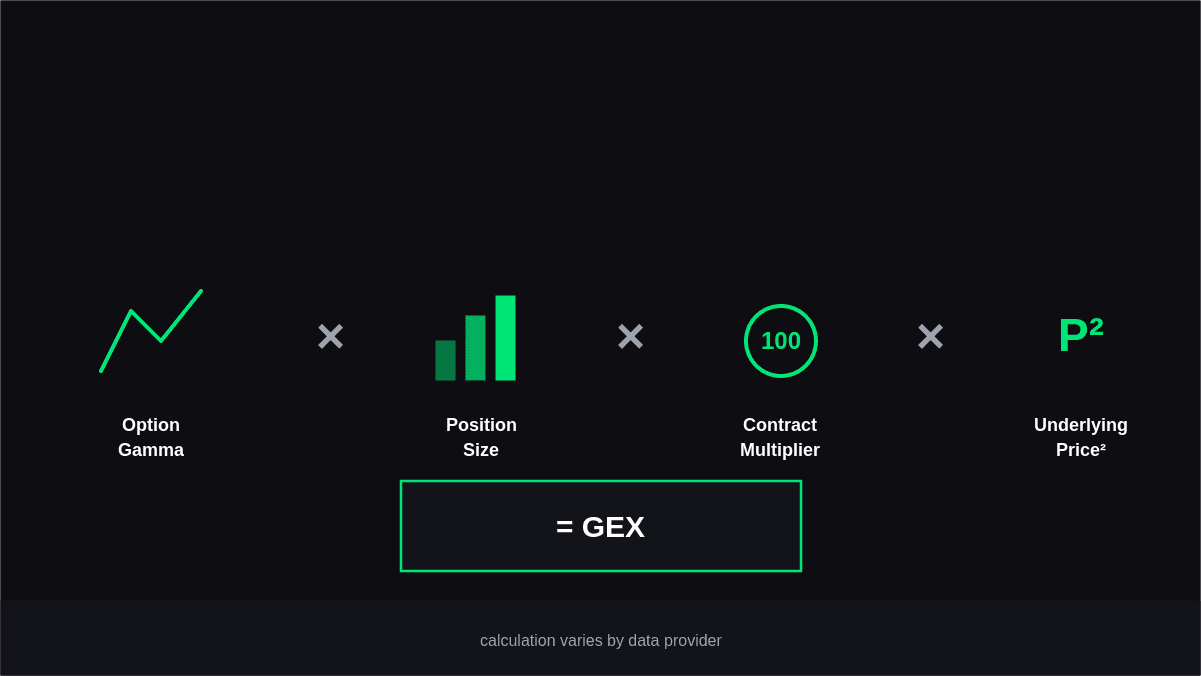
When this exposure is aggregated across many options contracts, traders can estimate where dealer hedging may become more significant.
Key factors that influence gamma exposure include:
- Option positioning: Whether dealers are net long or short gamma can affect how their hedging activity responds to price movements.
- Strike and expiration: Gamma tends to be more relevant near certain strike prices and as options approach expiration.
- Underlying price: Changes in the underlying can alter both the option’s delta and the amount of hedging required.
A simplified framework is:
GEX ≈ Option Gamma × Position Size × Contract Multiplier × Underlying Price²
The exact calculation can vary between data providers, particularly in how they determine dealer positioning.
How Dealer Hedging Can Influence Price
Dealers typically manage options risk rather than simply holding directional positions. When their delta changes, they may trade the underlying asset to keep their exposure within a desired range.
The direction of that hedging can depend on whether dealers are effectively long or short gamma.
| Dealer Gamma Position | Underlying Rises | Underlying Falls | Potential Market Effect |
|---|---|---|---|
| Positive gamma | Sell/hedge against rising delta | Buy/hedge against falling delta | Can dampen movement |
| Negative gamma | Buy as price rises | Sell as price falls | Can amplify movement |
| Near-zero gamma | Smaller hedging influence | Smaller hedging influence | Other flows may dominate |
This is why GEX is often discussed in connection with volatility. The important factor is not simply whether gamma exists, but how dealer hedging responds to changes in the underlying price.
Positive vs. Negative Gamma Regimes
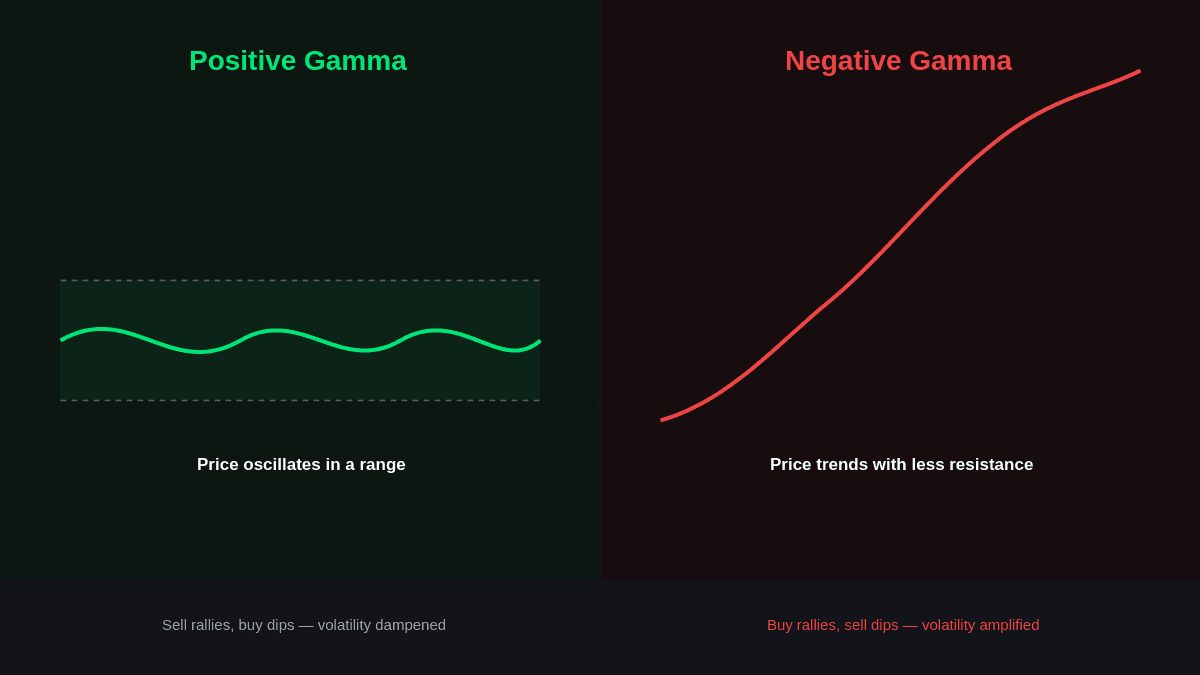
Positive gamma can encourage stabilizing dealer hedging, as dealers may sell into rising prices and buy into declines. Negative gamma can have the opposite effect, with hedging flows potentially reinforcing the market’s direction.
To understand it better, follow this comparison table:
| Gamma Regime | Dealer Hedging Behavior | Potential Market Effect |
|---|---|---|
| Positive Gamma | Sell as prices rise; buy as prices fall | Can dampen volatility |
| Negative Gamma | Buy as prices rise; sell as prices fall | Can amplify volatility |
| Key Gamma Levels | Hedging may concentrate near certain strikes | Can influence price behavior |
Key GEX Levels Traders Watch
Not every strike has the same importance. Large concentrations of open interest and gamma can make certain price levels more relevant to traders monitoring options positioning.
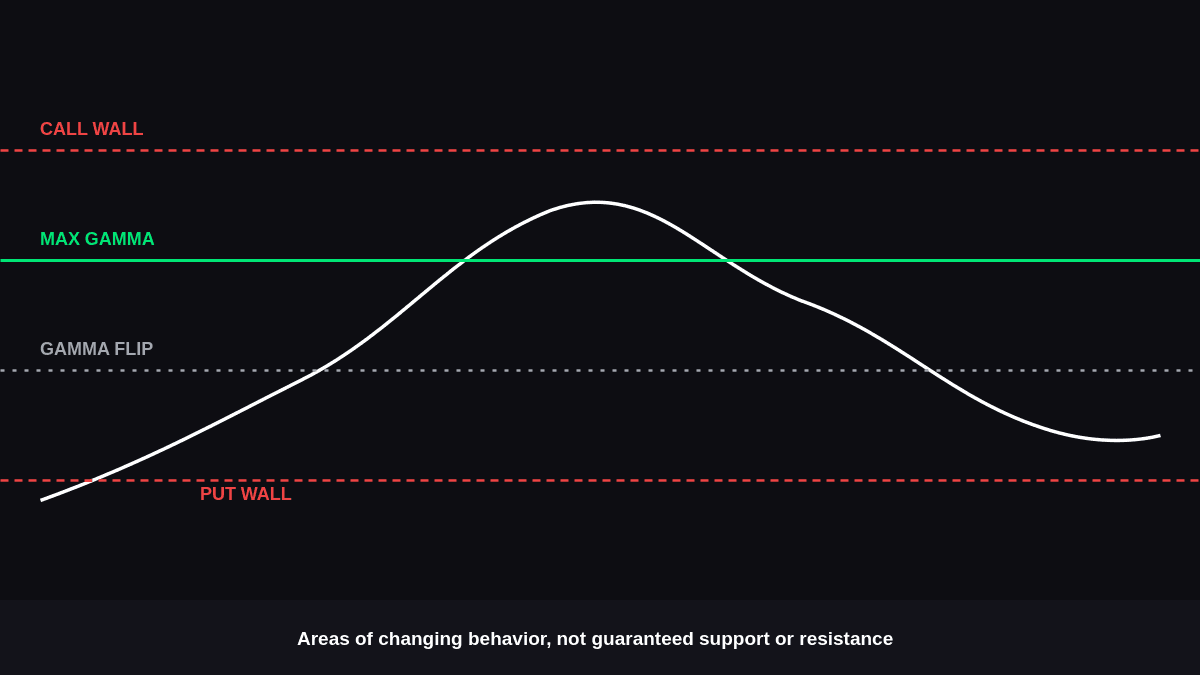
Common levels include:
- Gamma flip: An estimated price where aggregate gamma changes from positive to negative or vice versa.
- Call wall: A strike with substantial call positioning that may become an important area for dealer hedging.
- Put wall: A strike with significant put positioning that can influence hedging flows around that level.
- Maximum gamma: An area where calculated gamma exposure reaches an especially large concentration.
These levels should be treated as potential areas of changing market behavior, not guaranteed support and resistance.
Gamma Exposure Trading: Turning Positioning Into Context
Gamma exposure trading works best when GEX is used as a market-structure input rather than an automatic buy or sell signal.
A trader might first identify major gamma concentrations, then compare those areas with price structure, volume, volatility, and broader market conditions. If price approaches a significant gamma level while momentum weakens, the level may deserve closer attention to support resistance.
A practical workflow could look like this:
- Identify the major GEX levels for the underlying.
- Determine whether the broader gamma regime is positive or negative.
- Observe how price behaves as it approaches a major strike.
- Check whether volume and volatility confirm the developing move.
- Wait for price action to provide an actual trading setup.
- Define risk independently rather than placing a stop solely because of a gamma level.
This approach prevents GEX from becoming a substitute for trade management.
Why 0DTE Options Gamma Can Be Different
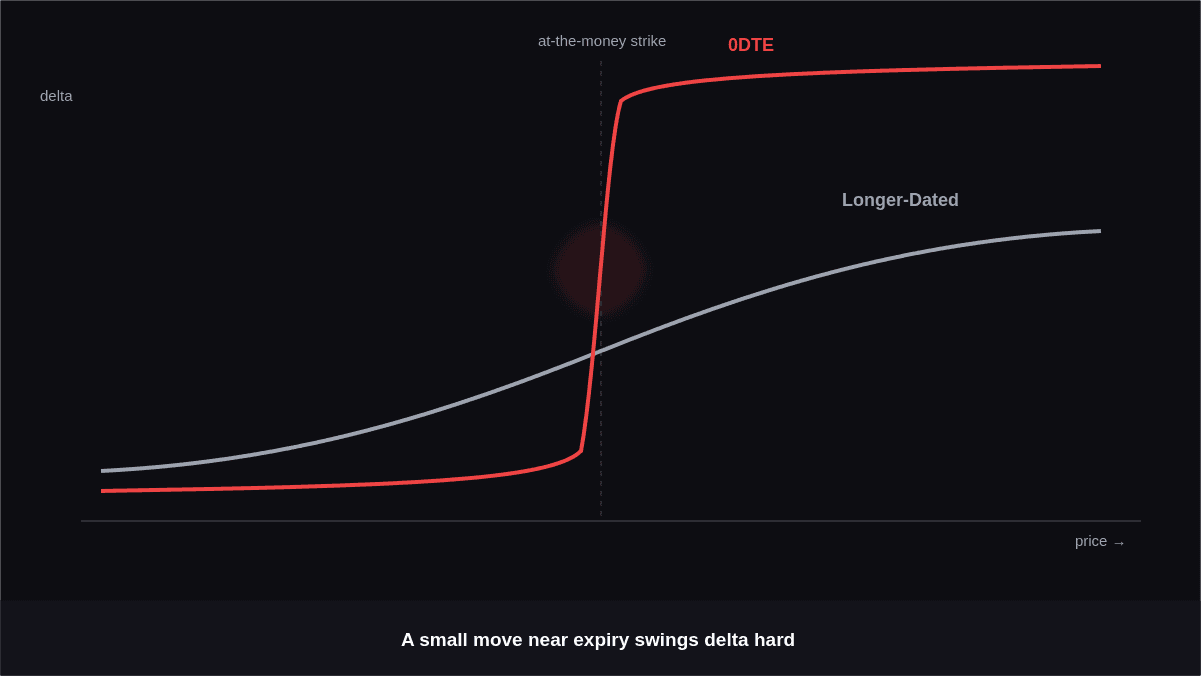
0DTE options gamma deserves special attention because options approaching expiration can become extremely sensitive to changes in the underlying, particularly when strikes are close to the current price.
As expiration approaches, delta can change rapidly around at-the-money strikes. That means relatively small underlying moves can produce meaningful changes in technical indicators.
For intraday traders, this can create periods where options positioning becomes especially relevant. However, 0DTE markets can also change rapidly as traders open, close, and roll positions throughout the session.
The result is a positioning landscape that can shift much faster than longer-dated options positioning.
Reading Dealer Gamma Positioning Without Overcomplicating It
Dealer gamma positioning is most useful when traders focus on the relationship between positioning and price rather than trying to predict every hedge.
Consider two different environments:
- Positive gamma: Price may spend more time oscillating around important levels, with hedging flows potentially reducing directional momentum.
- Negative gamma: Price can become more sensitive to directional movement because hedging flows may reinforce the underlying trend.
The distinction provides a useful lens for interpreting volatility. Instead of asking only, “Where will price go?”, traders can also ask, “What type of hedging behavior could occur if price reaches this level?”
That shift can make options data more actionable without turning it into a prediction engine.
What Can Make GEX Signals Less Reliable?
GEX calculations are estimates, and their usefulness depends heavily on the quality of the underlying options data and assumptions about dealer positioning.
Several factors can reduce their reliability:
- Dealer positions are not directly visible to most traders.
- Open interest does not always reveal who is long or short an option.
- New trades can rapidly change the positioning picture.
- Large news events can overwhelm normal hedging flows.
- Different GEX providers may use different calculation methods.
- Volatility changes can alter option sensitivity even when price movement appears modest.
For this reason, traders should avoid treating a single GEX number as an objective measurement of future price direction.
A Practical GEX Checklist
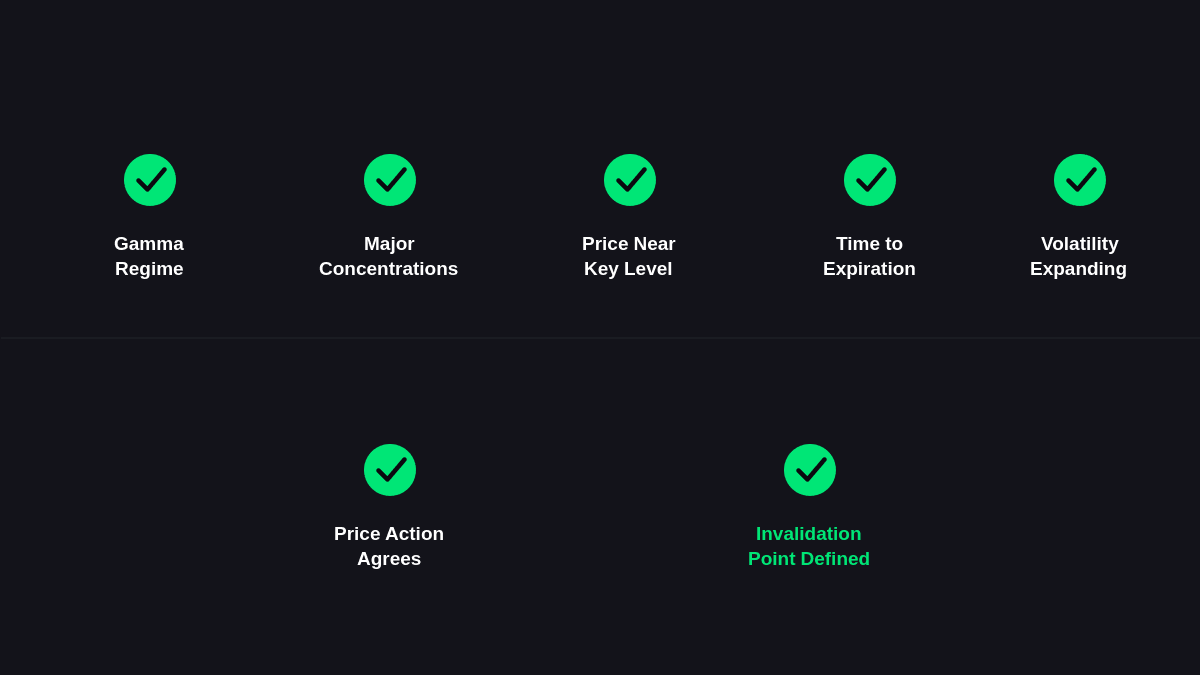
Before incorporating gamma data into a trading plan, ask:
- What is the current gamma regime? Positive, negative, or near neutral.
- Where are the major concentrations? Look for significant calls and put strikes.
- Is price near a key gamma level? Consider whether hedging behavior could change around that level.
- Are options close to expiration? Gamma sensitivity can increase around relevant strikes.
- Is volatility expanding? Watch for conditions that could lead to larger price movements.
- Does price action agree? Look for confirmation from market structure and momentum.
- What is the invalidation point? Define a clear level where the trade idea no longer holds.
This keeps GEX in its proper role: context for market behavior rather than a guaranteed directional signal.
Conclusion
Understanding Options gamma exposure explained means looking beyond a single indicator and focusing on the mechanics behind dealer hedging. Positive and negative gamma environments can create different incentives for hedging, while concentrated strikes and short-dated options can make those effects more noticeable.
GEX can help traders identify areas where market behavior may change, but it cannot predict every move. The strongest application comes from combining gamma positioning with price action concepts, volatility, liquidity, and disciplined risk management.
Used this way, gamma exposure becomes a useful lens for understanding why the market may react differently around certain prices, rather than another signal to follow blindly.