The put call ratio trading strategy uses options activity to measure whether traders are becoming unusually bullish or bearish. Instead of following price alone, it examines the relationship between put and call activity to identify potential shifts in market sentiment.
High market sentiment can sometimes come before a market changes direction, so traders often use the indicator as a contrarian signal. However, it works best when combined with other market information, such as signals and overlays, instead of being used alone.
In this guide, we’ll examine how the ratio is calculated, what its readings can suggest, and how traders can incorporate it into a broader decision-making process.
What Is the Put-Call Ratio, and What Does It Mean?
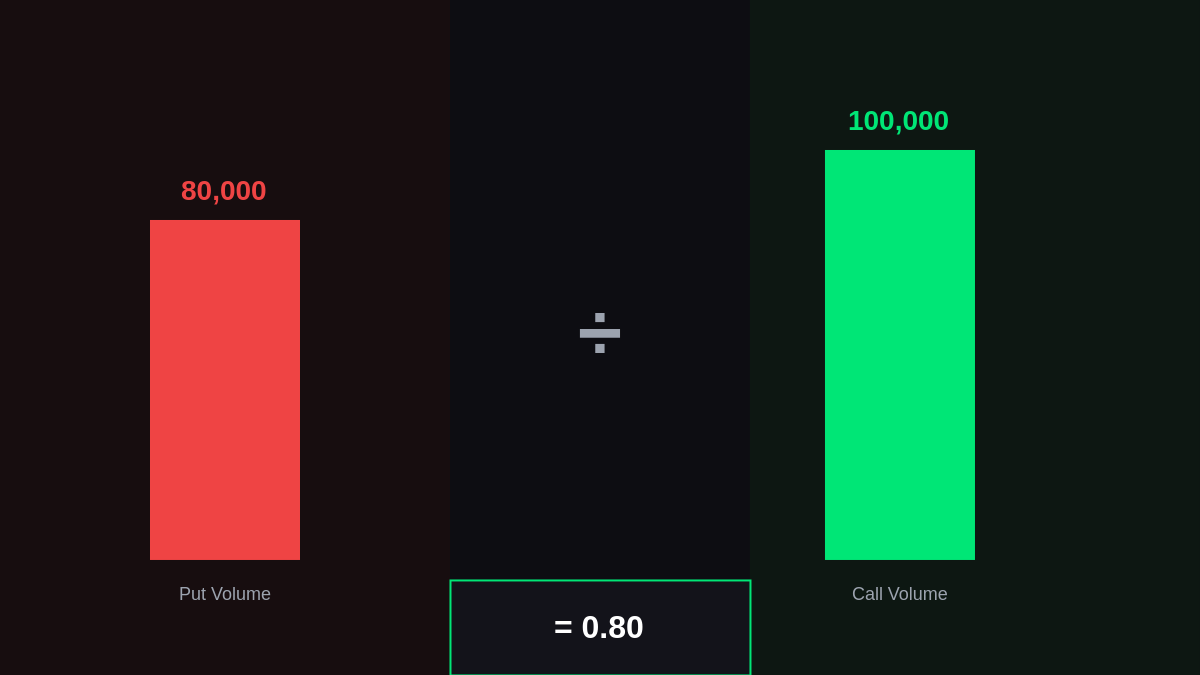
The put/call ratio compares put options with call options. It is usually calculated by dividing the number of puts by the number of calls:
Put/Call Ratio = Put Volume ÷ Call Volume
For example, if 80,000 puts and 100,000 calls are traded, the ratio is 0.80. A higher ratio means there are more puts compared with calls, while a lower ratio means calls are more active.
The put call ratio meaning can change depending on the market and timeframe. Instead of assuming that a high ratio is always bearish or a low ratio is always bullish, traders compare the current reading with past levels. An unusually high or low reading can show that market sentiment has become more one-sided than usual.
Why the Put Call Ratio Can Act as a Contrarian Indicator
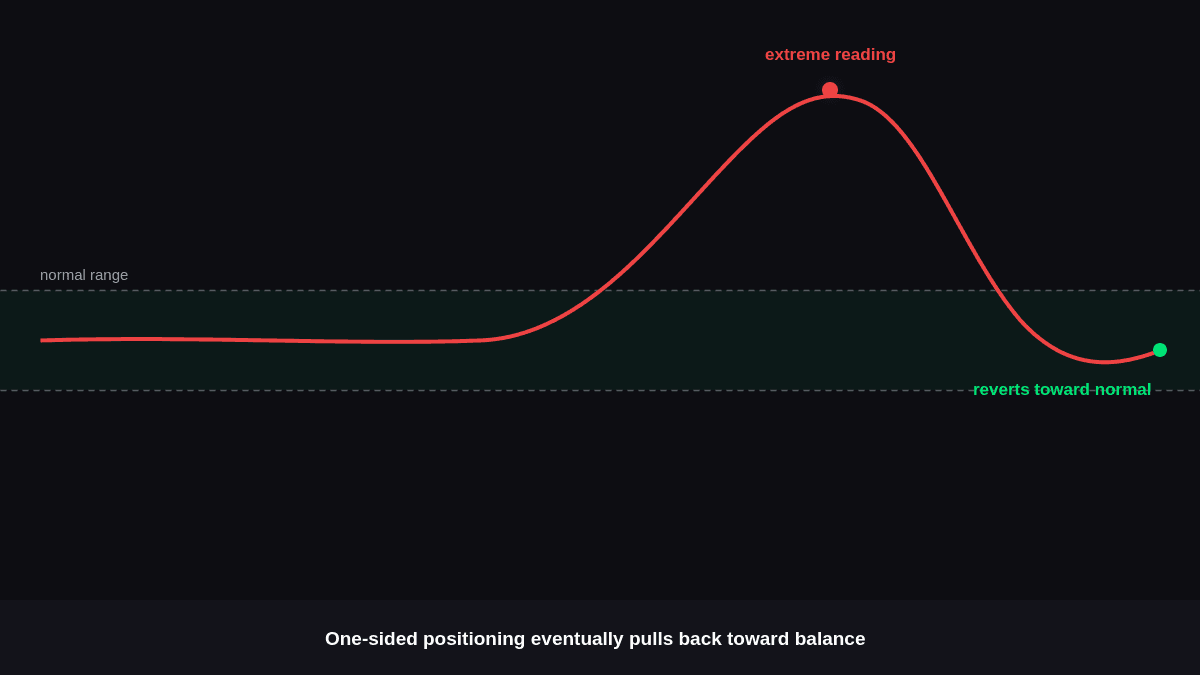
The market may become highly skewed towards bullishness or bearishness if the confidence in the market becomes more on one side. Once the positioning is very extreme, the market may become vulnerable to a shift in sentiment if prices fail to continue moving as expected.
That is why traders utilize the put call ratio as a contrarian trading indicator. The unusually high or low number helps to identify conditions where technical indicators can signal that market sentiment is too extreme.
Key signals traders may watch include:
- High ratio: May reflect strong bearish or defensive sentiment.
- Low ratio: Can indicate unusually optimistic positioning.
- Extreme reading: May suggest that sentiment has moved far from its normal range.
- Return toward normal levels: Can indicate that the previous sentiment extreme is starting to fade.
- Price confirmation: Helps determine whether the sentiment shift is actually affecting the market.
However, an extreme reading does not automatically mean a reversal is coming. A market can remain heavily bearish or bullish while the existing trend continues.
That is why the ratio is compared against its own historic range and used alongside price movement, market structure, and key levels of support and resistance. This makes the ratio more useful as a contextual tool for spotting potential extremes rather than a standalone entry or exit signal.
How to Calculate the Put-Call Ratio
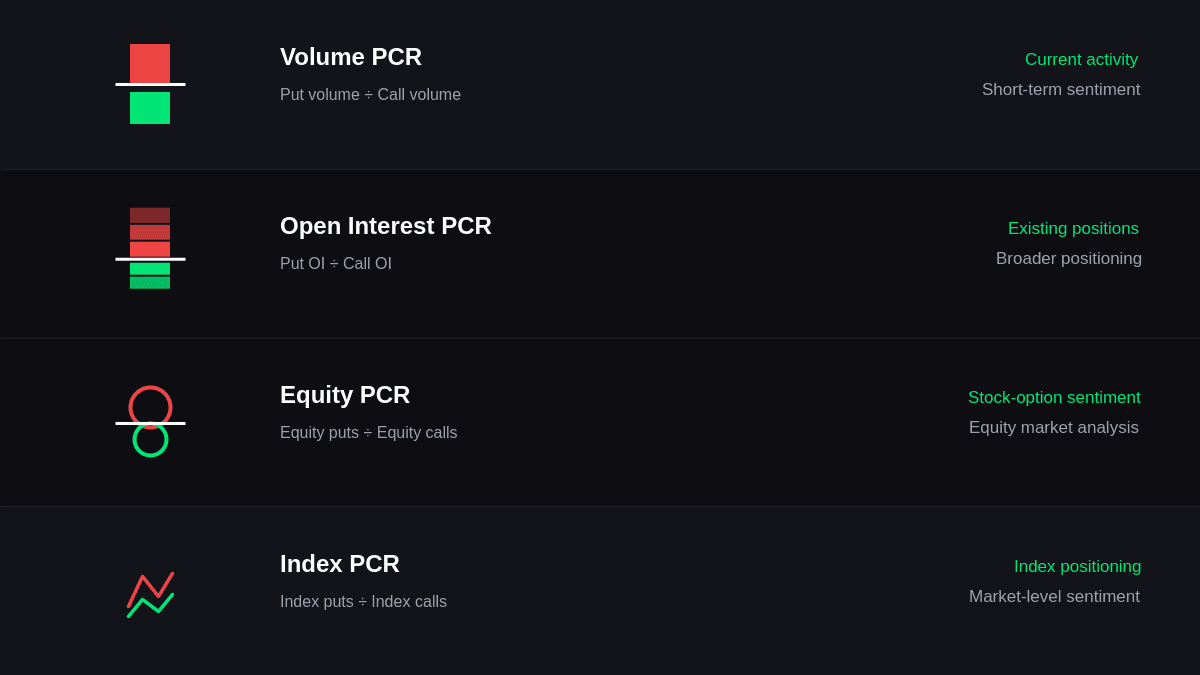
There are two main ways to calculate the put/call ratio: trading volume and open interest. Each provides a different view of options activity and can be useful depending on the trader’s analysis timeframe.
To understand it better follow this comparison table:
| Method | Method | What It Measures | Best Use |
|---|---|---|---|
| Volume PCR | Put volume ÷ Call volume | Current options activity | Short-term sentiment |
| Open Interest PCR | Put OI ÷ Call OI | Existing positions | Broader positioning |
| Equity PCR | Equity puts ÷ equity calls | Stock-option sentiment | Equity market analysis |
| Index PCR | Index puts ÷ index calls | Index options positioning | Market-level sentiment |
These versions can produce different readings because they measure different aspects of options participation.
How to Use the Put-Call Ratio in a Trading Strategy
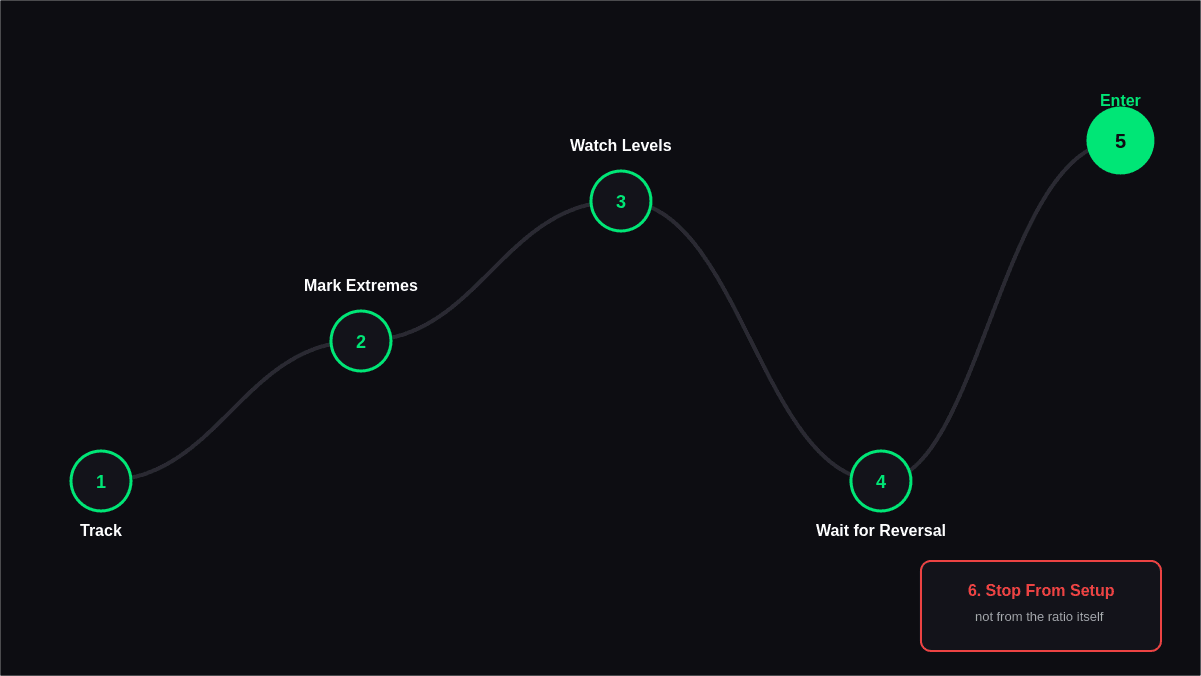
Understanding how to use the put-call ratio requires more than checking whether the number is high or low. The most useful approach is to combine the ratio with price action and other market information.
1. Establish the Market Context
Start with determining whether the market trend in general is either bullish, consolidative, or exhausting.
A high ratio during a strong downtrend may simply reflect continuing defensive positioning rather than an immediate reversal.
2. Identify Historical Extremes
Instead of applying one universal threshold, compare the current reading with its own historical range.
A ratio that is extreme relative to recent conditions can provide more useful information than a number that appears high in isolation.
3. Wait for Price Confirmation
Sentiment can remain extreme longer than expected. Look for price-based evidence before entering a trade.
Potential confirmation can include:
- A break of a recent swing high or low
- A failed breakout
- A change in market structure
- A strong rejection from a major support or resistance area
4. Consider the Trend
The ratio should support, not replace, the broader market analysis.
For example, traders may interpret unusually bearish sentiment differently when the market is approaching major support than when price has just broken below a long-established range.
A Practical Put-Call Ratio Trading Strategy
A simple approach is to use extreme sentiment as a warning sign and price action as the entry signal. This helps traders avoid entering a trade based only on the put/call ratio.
Step 1:
Track the ratio over a consistent timeframe. Using the same timeframe makes it easier to compare current sentiment with previous market conditions.
Step 2:
Mark unusually high and low historical readings. These levels can help you spot when bullish or bearish sentiment has moved well beyond its normal range.
Step 3:
Watch for the price to approach an important technical level while sentiment reaches an extreme. Support, resistance, previous highs, and previous lows can provide useful areas for confirmation.
Step 4:
Wait for evidence that the price move is losing momentum or reversing. Look for signs such as rejection candles, failed breakouts, or a change in short-term market structure.
Step 5:
Enter only after the chosen confirmation appears. This reduces the risk of taking a trade simply because the ratio has reached an extreme level.
Step 6:
Place the stop based on the trade setup rather than the ratio itself. The stop should reflect where the trading idea becomes invalid if price moves against the expected direction.
This approach stops traders from treating the indicator as a direct buy or sell signal. Instead, it helps them use the ratio as supporting information alongside price action and other market signals.
Example of the Strategy in Action
Suppose an index falls sharply toward a major support zone while its put/call ratio reaches one of its highest readings in several months.
The elevated ratio suggests that bearish sentiment has become unusually strong. However, buying immediately would still be speculative.
Instead, the trader waits for the price to stabilize. If the index forms a bullish reversal pattern and moves back above a nearby resistance level, the sentiment reading can strengthen the case for a contrarian long setup.
If price continues falling, the high ratio has not produced a reversal signal, and the trader avoids forcing the trade.
Common Mistakes When Using the Put-Call Ratio
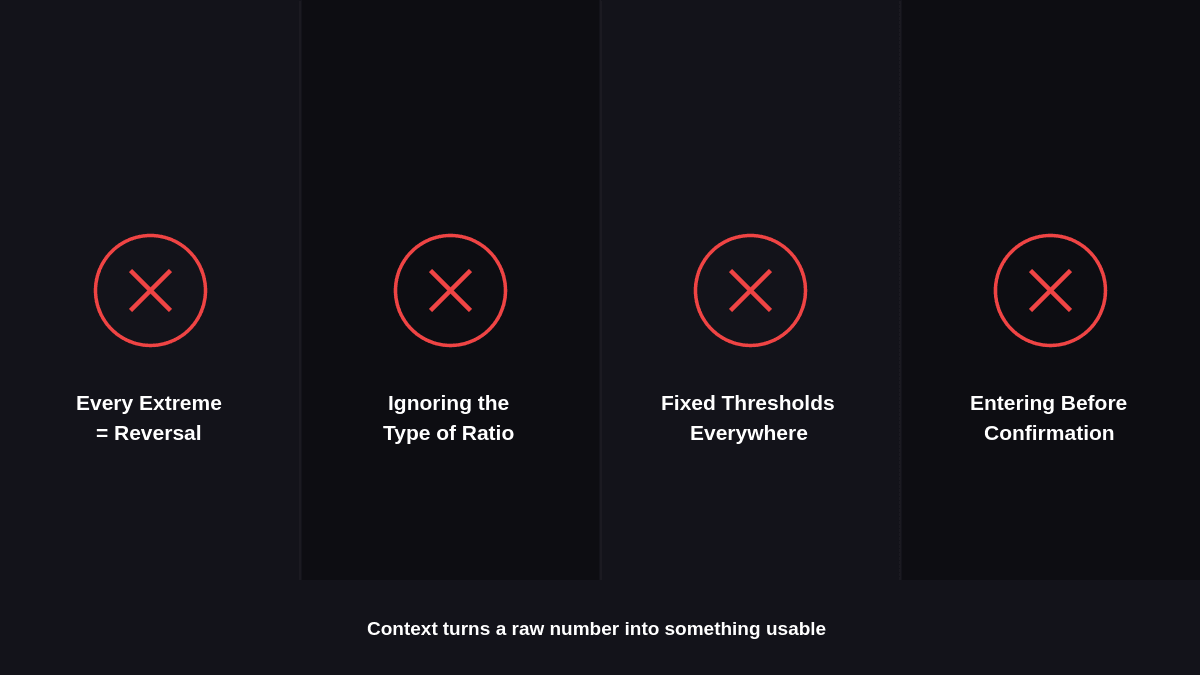
The put/call ratio can provide useful sentiment information, but its signals can be misinterpreted when used without context. Avoiding these common mistakes can make the indicator more practical and reliable.
- Treating Every Extreme as a Reversal
- Ignoring the Type of Ratio
- Using Fixed Thresholds Everywhere
- Entering Before Confirmation
Advantages and Limitations
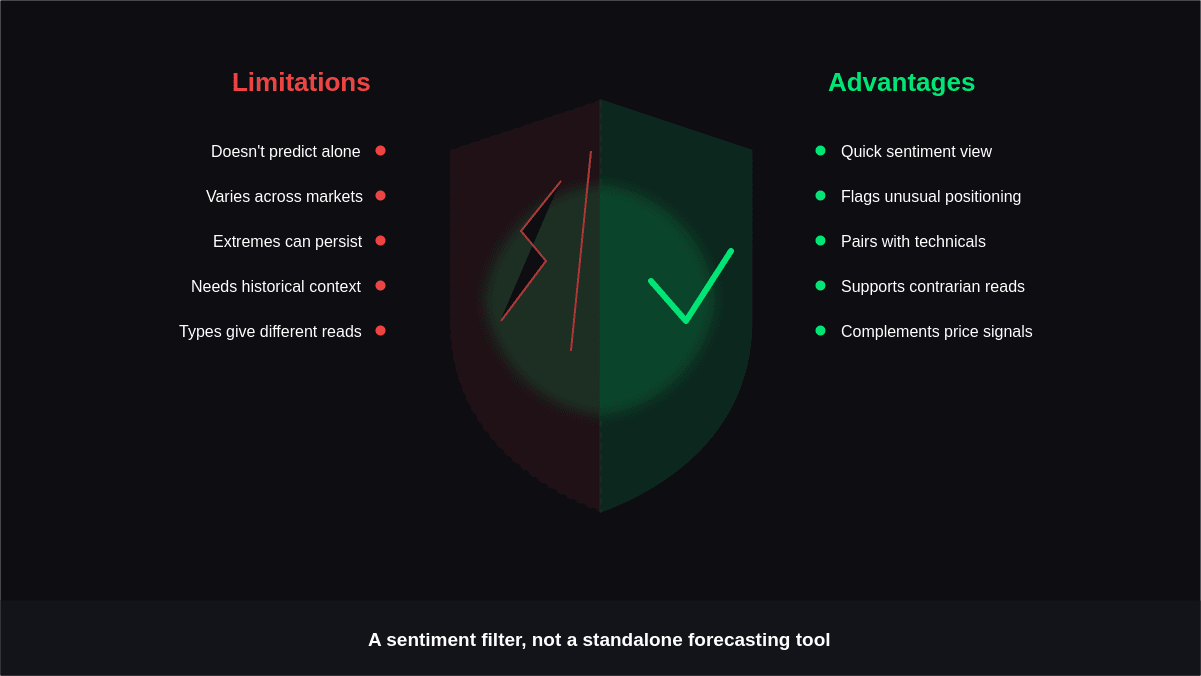
The put/call ratio can add useful context to market sentiment and help traders identify unusually bullish or bearish positioning. However, it has limitations and works best when combined with other forms of market analysis.
| Advantage | Limitation |
|---|---|
| Provides a quick view of options sentiment | Does not predict reversals by itself |
| Can highlight unusually positioned markets | Interpretation varies across markets |
| Useful alongside technical analysis | Extreme readings can persist |
| Supports contrarian analysis | Requires historical context |
| Can complement price-based signals | Different PCR calculations can give different results |
Conclusion
A put call ratio trading strategy can help traders recognize when options sentiment becomes unusually one-sided. Rather than treating a high or low reading as an automatic signal, traders can use it to identify conditions worth investigating.
The strongest approach combines the ratio with historical context, market structure, support and resistance, and confirmation from price action. Used this way, the indicator becomes a practical sentiment filter rather than a standalone forecasting tool.